David Whitney Building Local Historic District
The David Whitney Building Local Historic District consists only of the David Whitney Building, which faces Park Boulevard and spans from Woodward Avenue to Washington Boulevard. You can read details about the district and its building in the Proposed David Whitney Building Historic District Final Report (local copy), which I recommend highly to anyone interested in Detroit's history. A Wikipedia Page also describes the district.
The David Whitney Building is significant as one of the key buildings forming the wall defining Grand Circus Park. It is also one of only three surviving buildings in Detroit credited to the Chicago architectural firm of Daniel H. Burnham and Company, and one of only two buildings in Detroit which contain dramatic skylight-covered interior atrium lobbies (except I know of three: this, the Book Building, and Chrysler House). It is a contributing building to the Grand Circus Park Historic District, which was listed on the National Register of Historic Places in 1983.
The David Whitney Building was named in honor of David Whitney, Jr. (1830-1900), a man significant in the history of Detroit's commercial and industrial development. He was a lumber baron, shipping magnate, landholder, and one of Detroit's wealthiest men at the turn of the century. The other architectural gem associated with David Whitney, Jr. in Detroit is his exquisite 21,000 square foot home at 4421 Woodward Avenue, now the Whitney Restaurant.
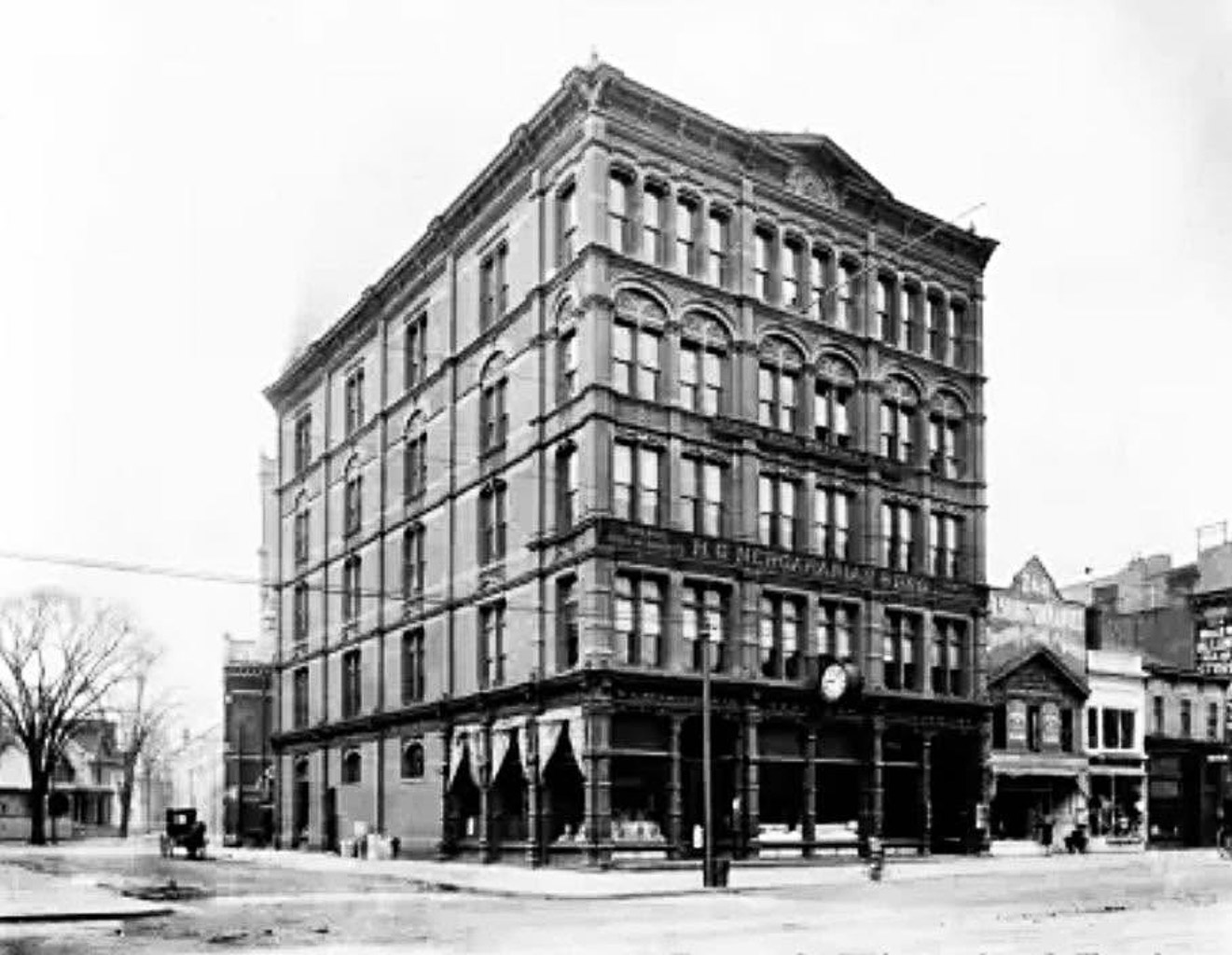
The land was purchased in 1885, at a time when there was not a single commercial building on Woodward between Clifford and Park (can you imagine?). A 5-story commercial structure containing 5 stores was built (1st photo below). The stores it contained were Newton Annis, Wholesale Furrier, H.G. Nergarian and Brothers, O'Neil and Hoffner, D.S. Marshall, and Charles Watson.
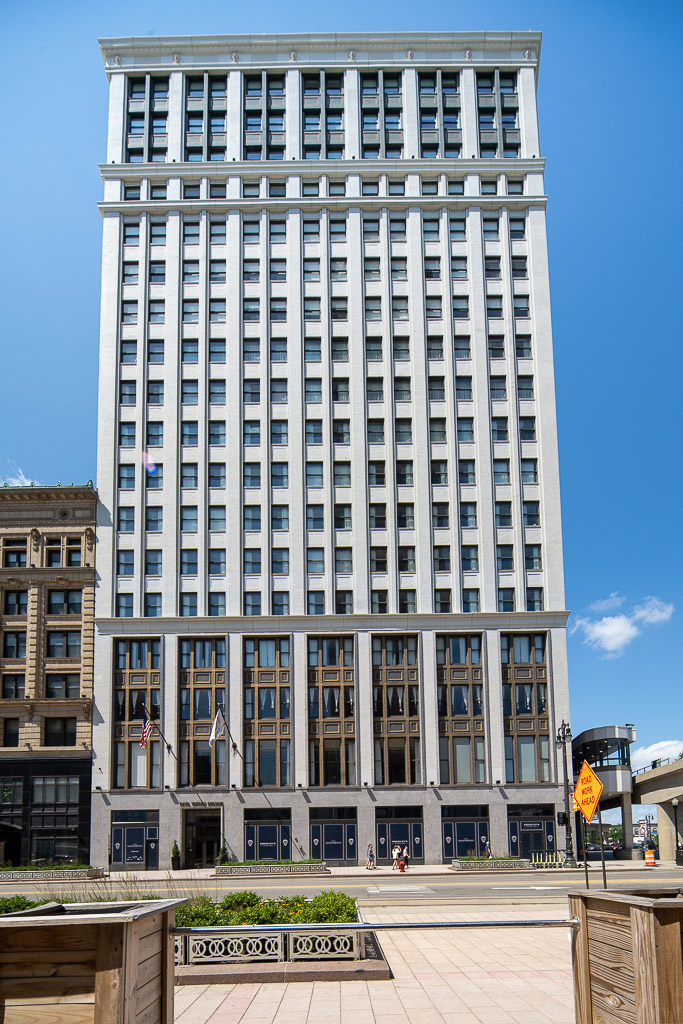
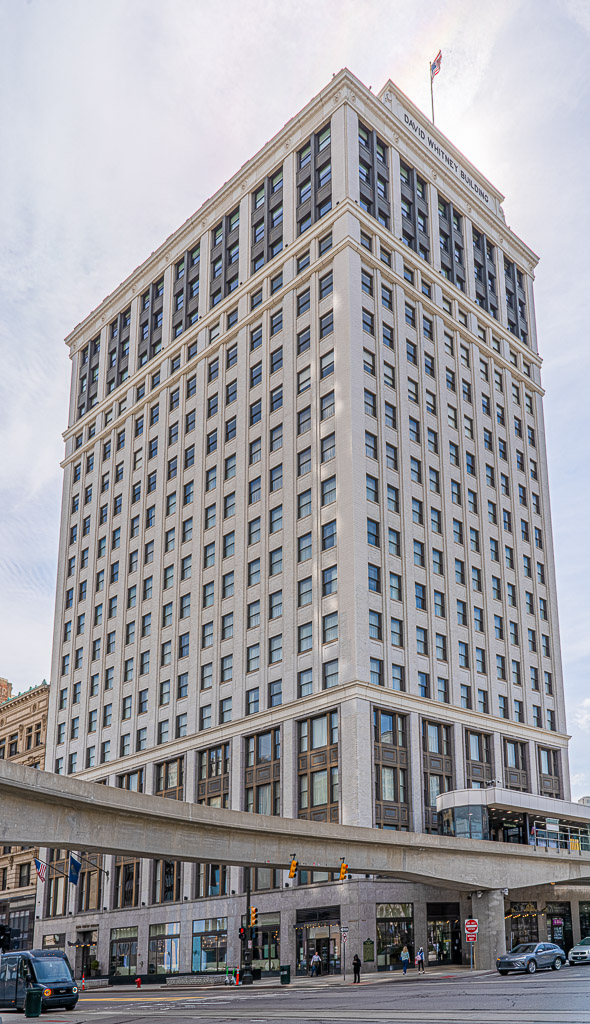
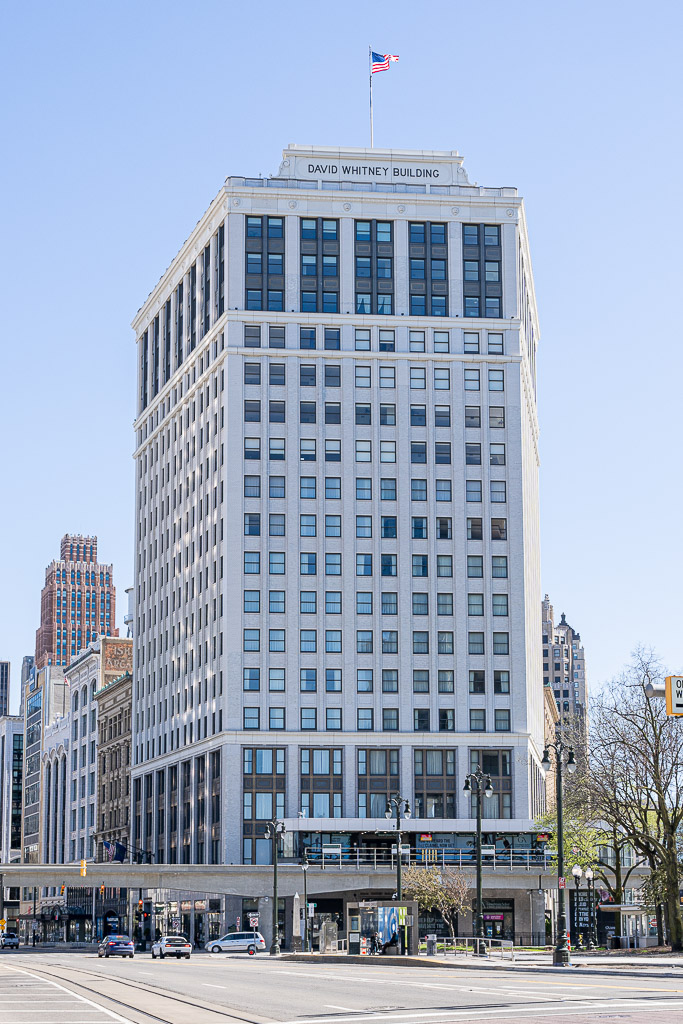
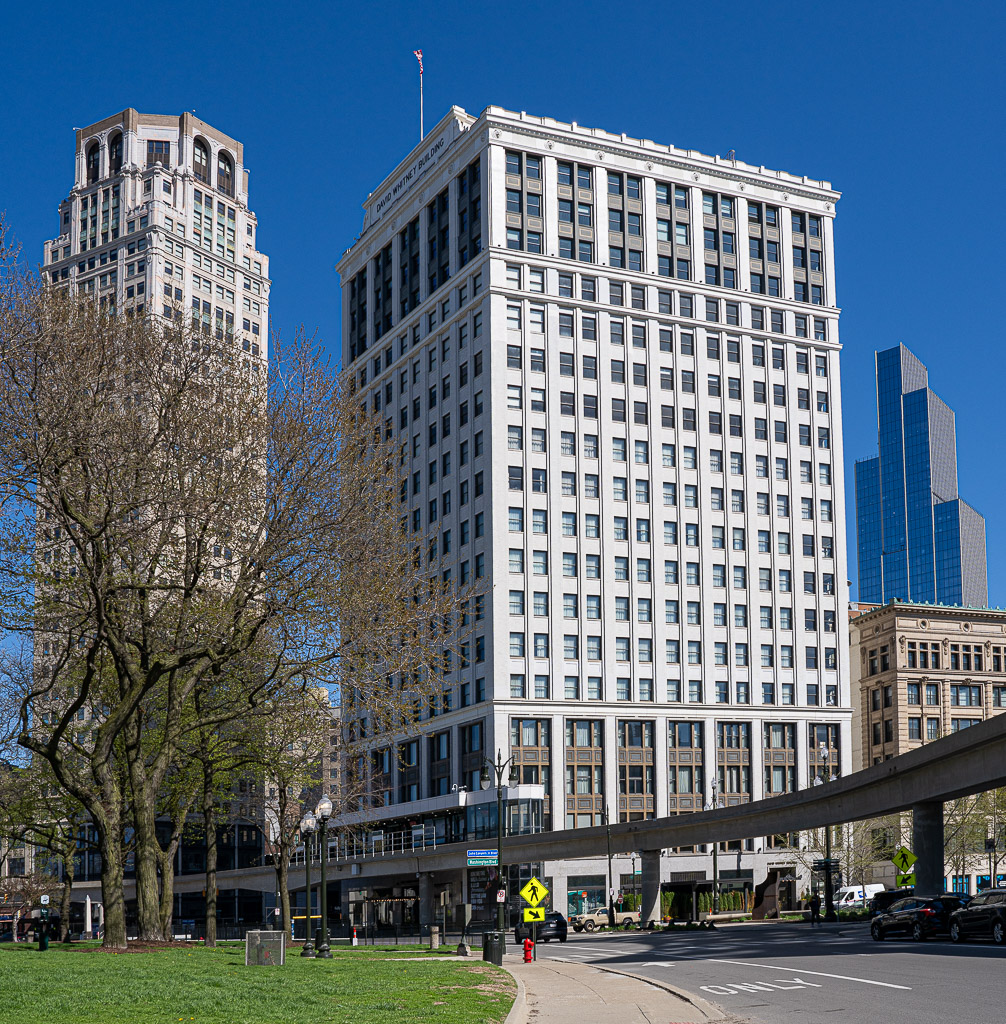
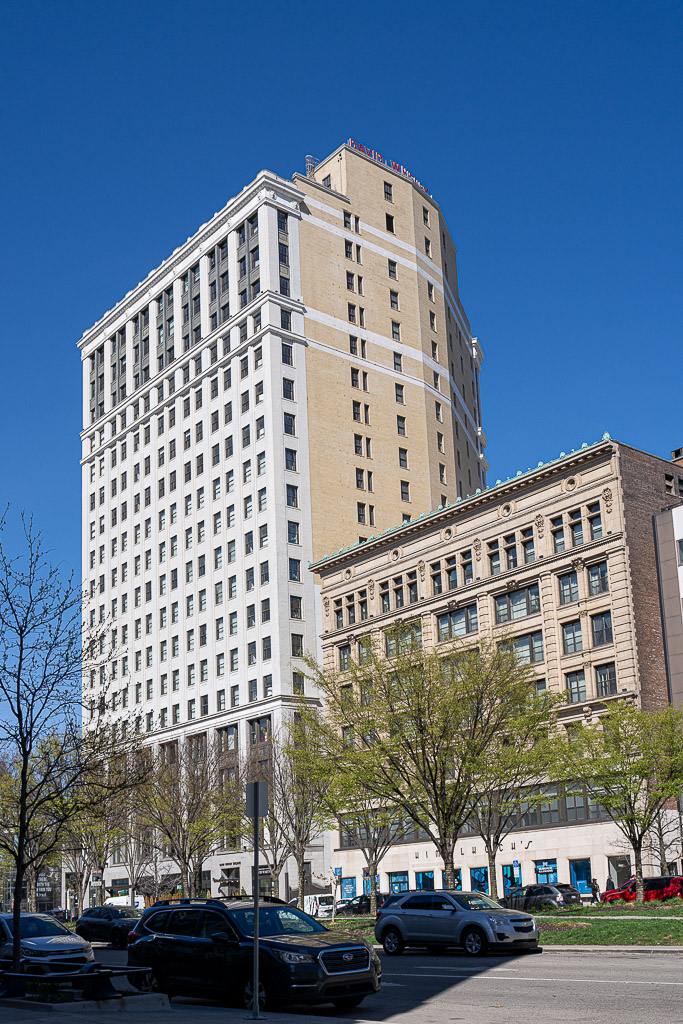
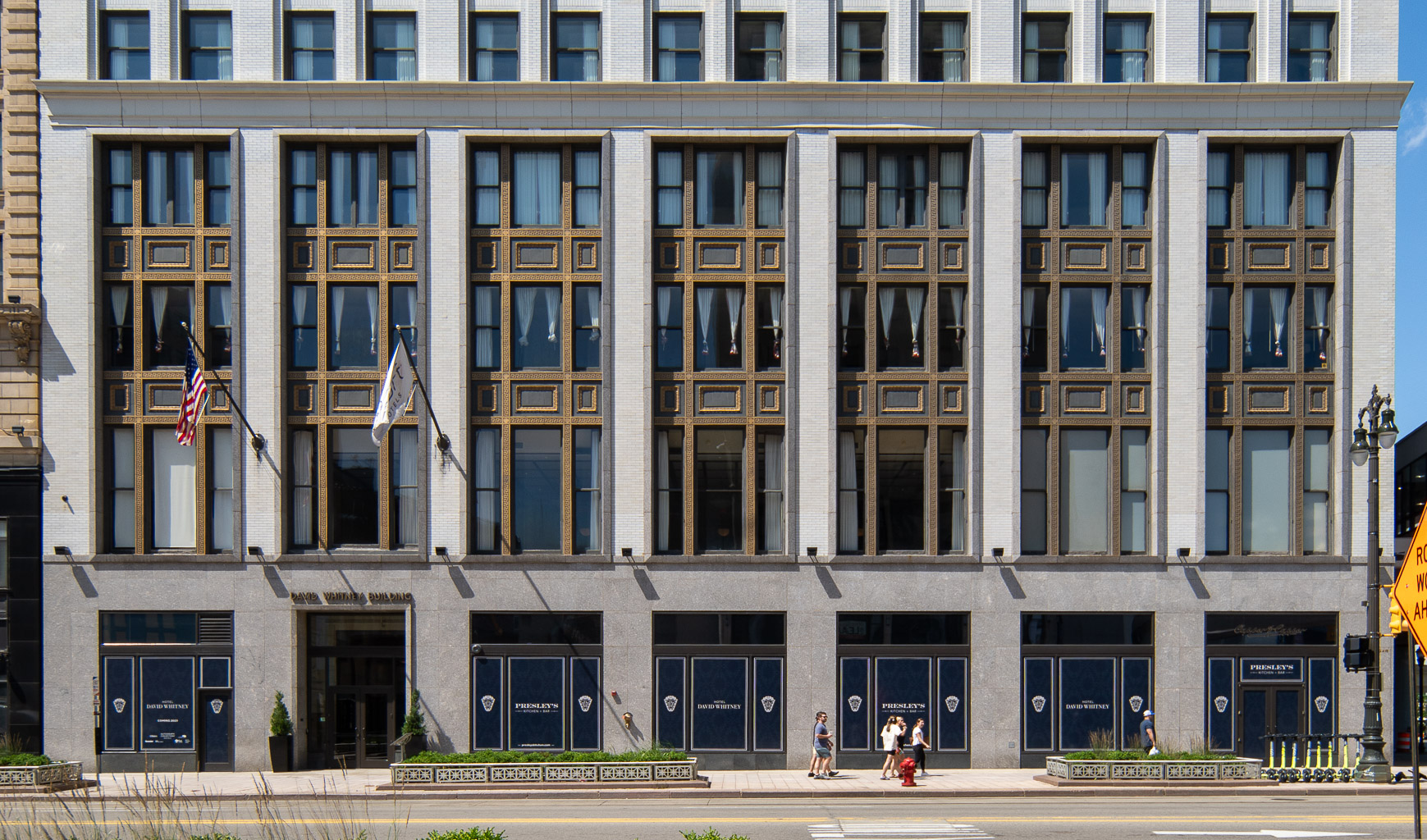
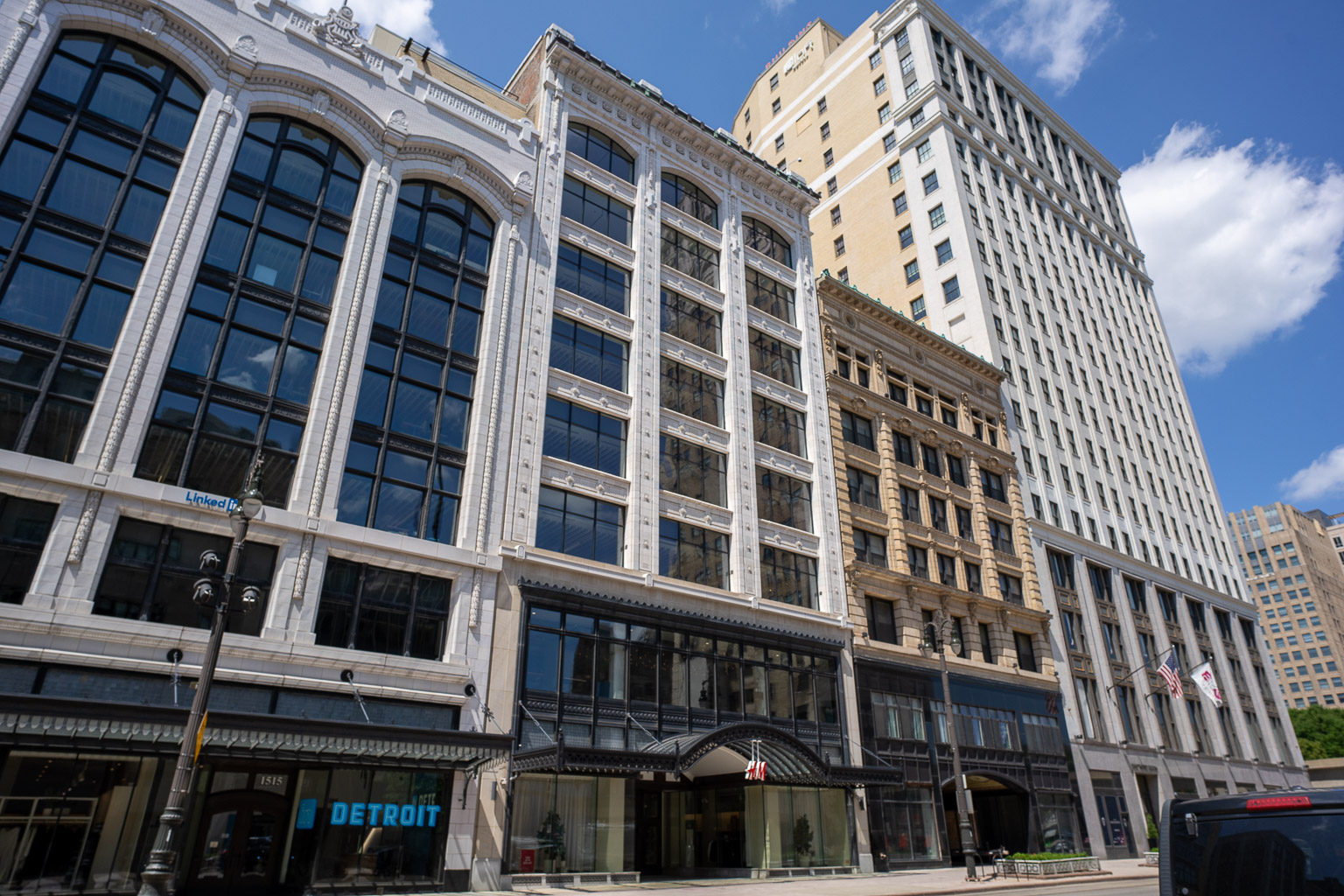
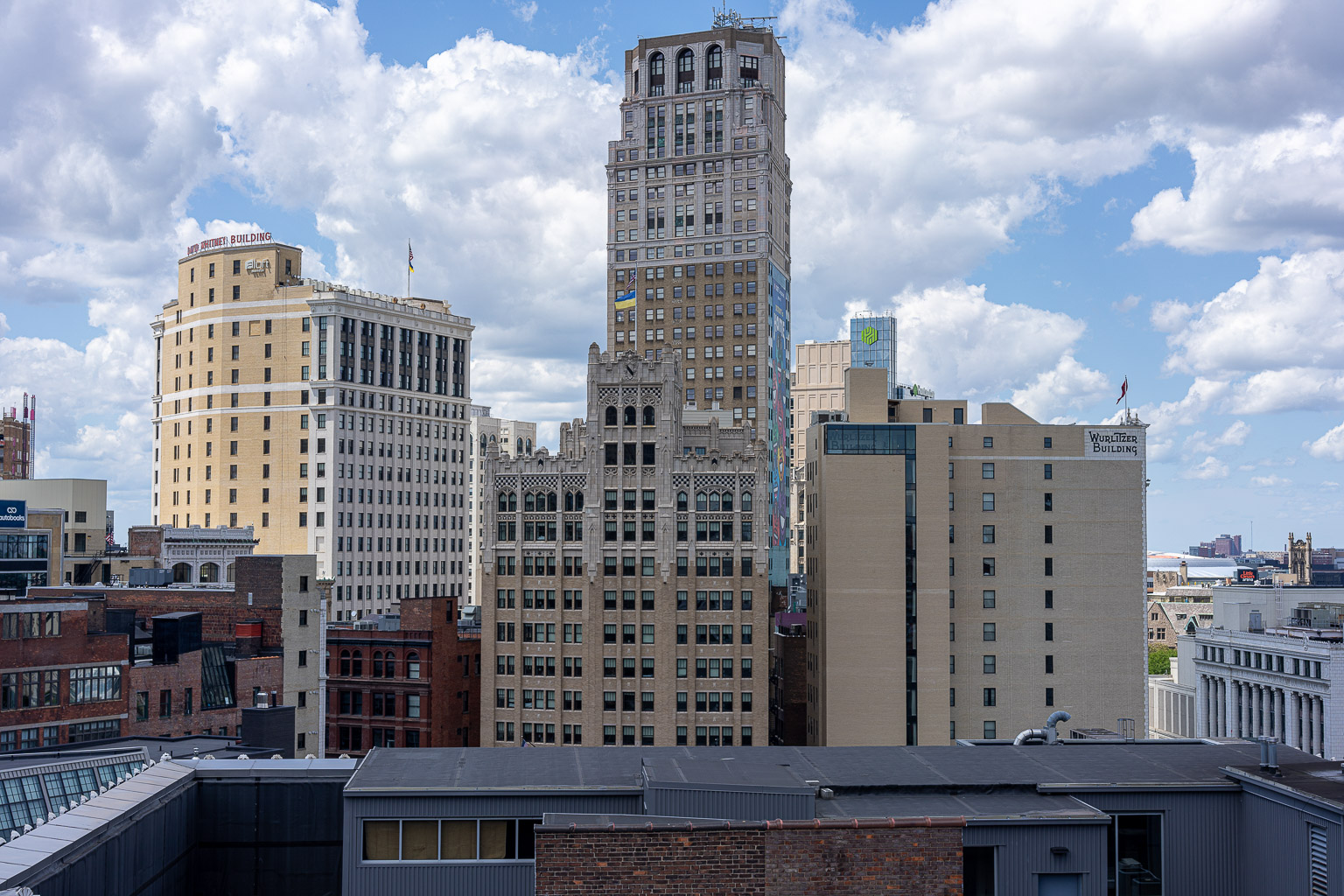
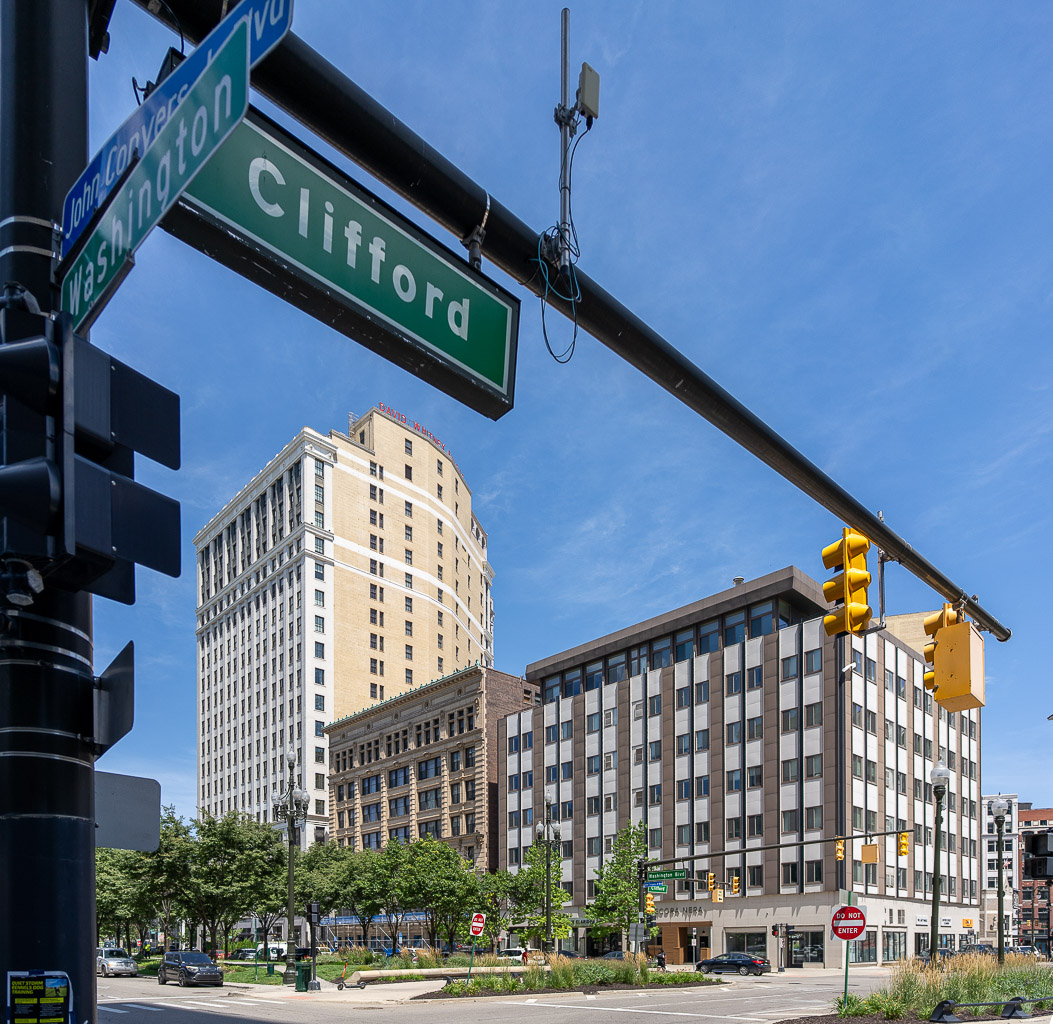
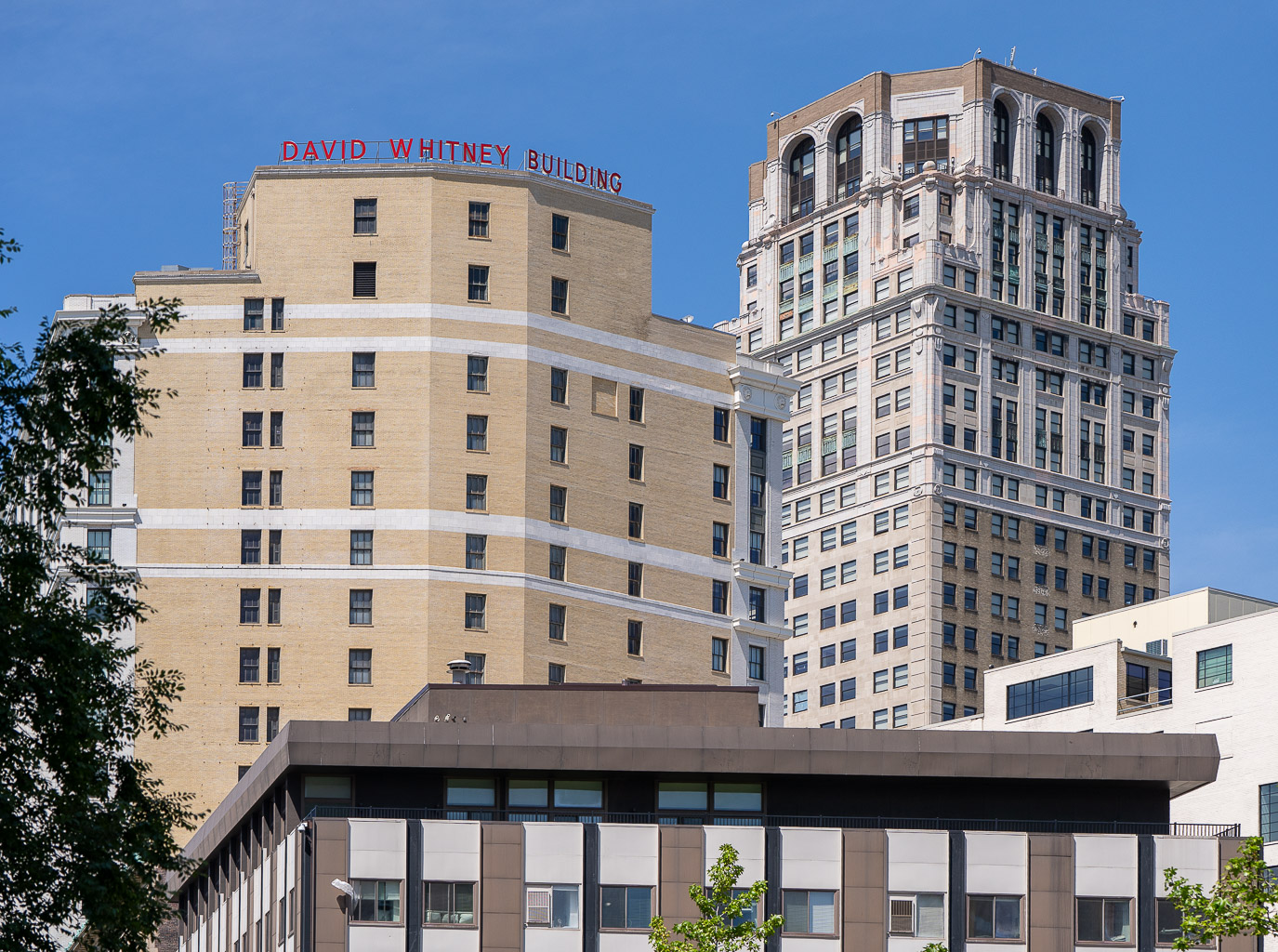
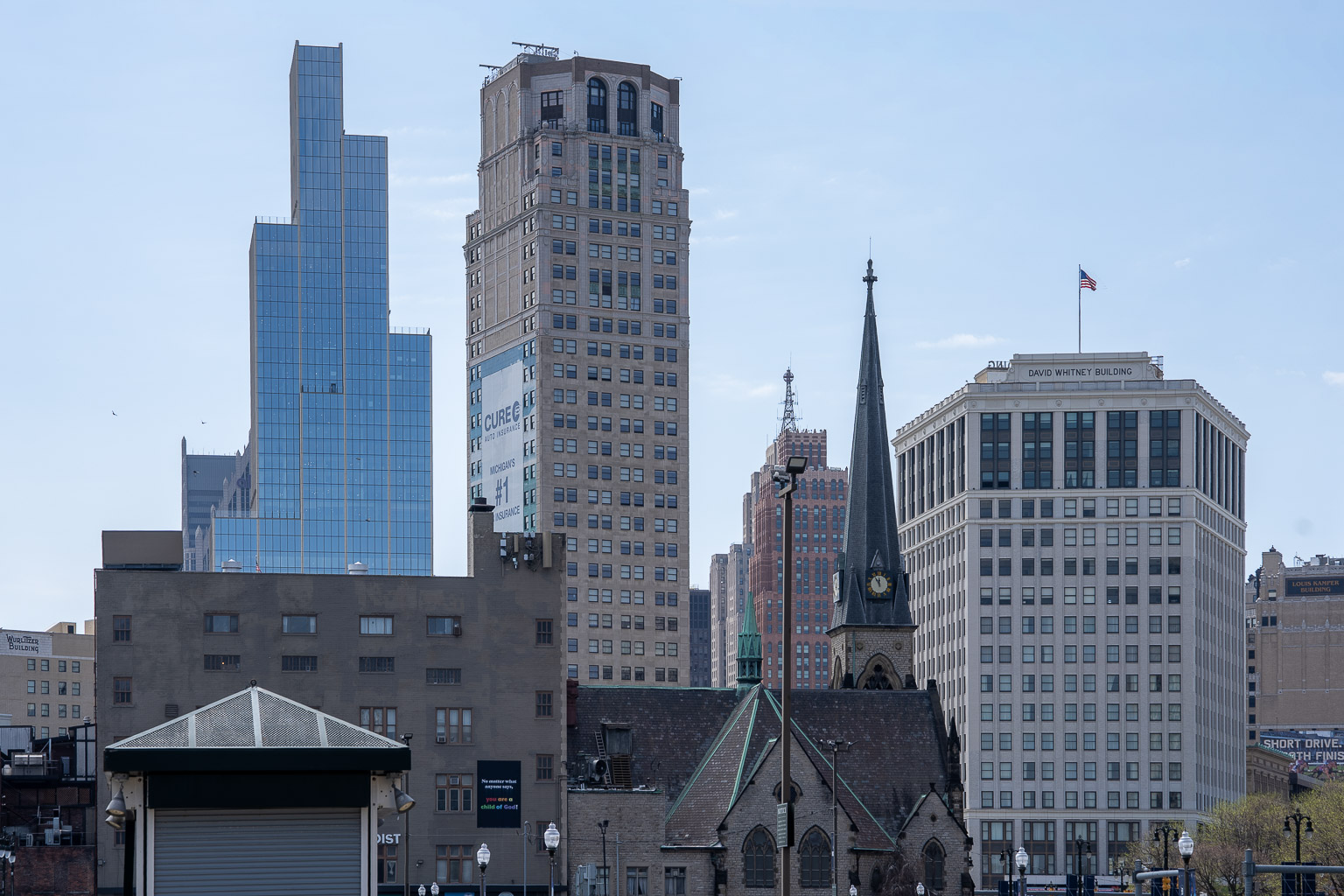
That building was demolished in early 1914 for the construction of today's building which opened in January 1915. Exterior photos showing all sides of the David Whitney Building today (2026) are shown below.
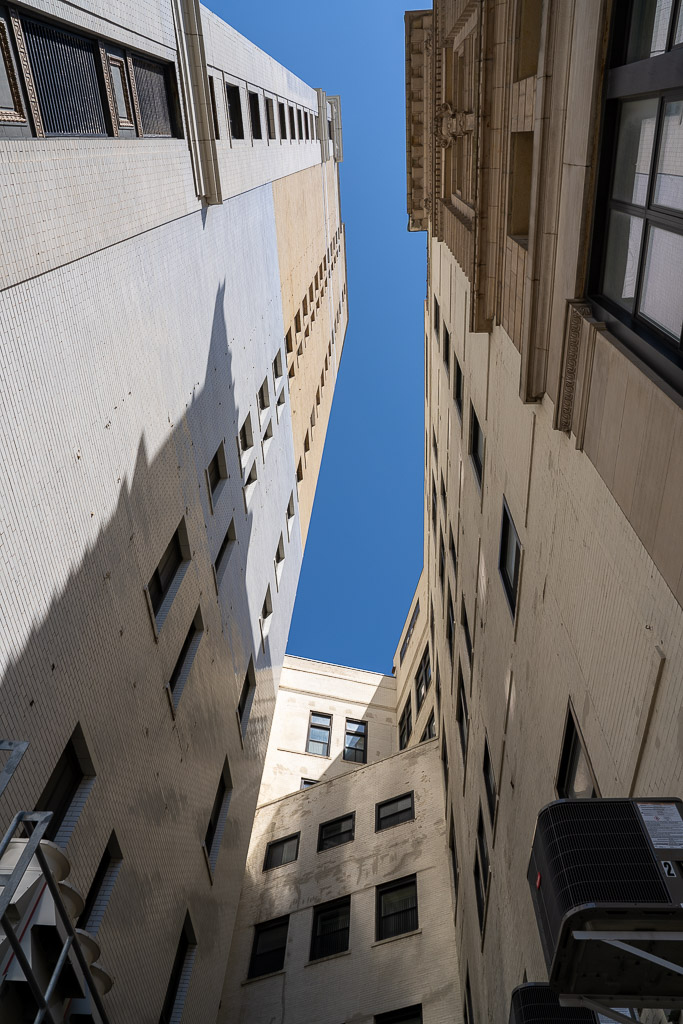
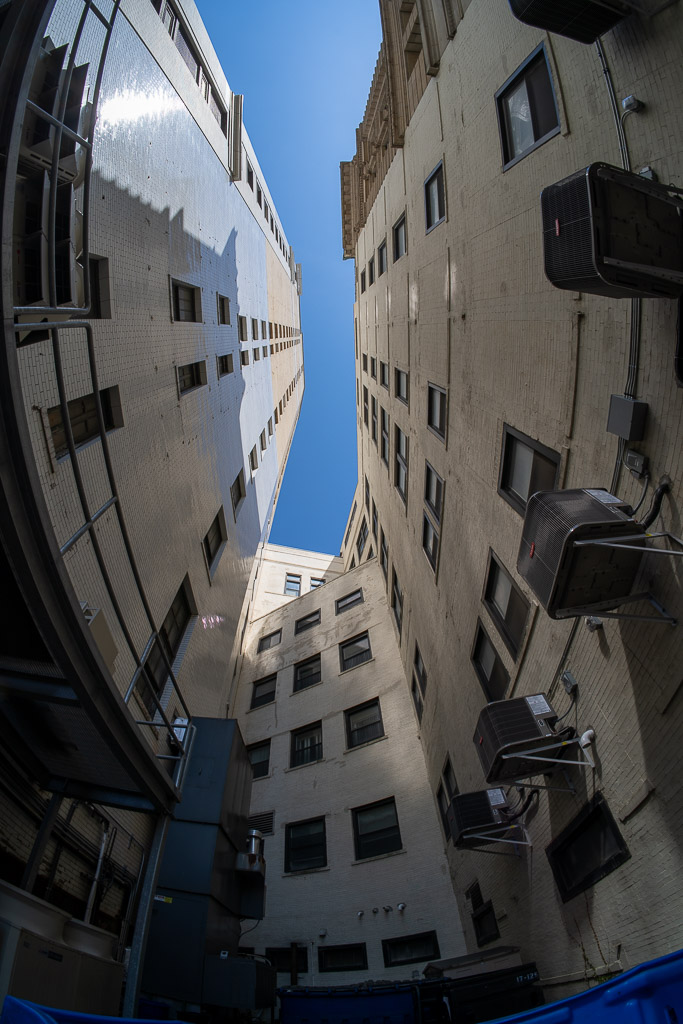
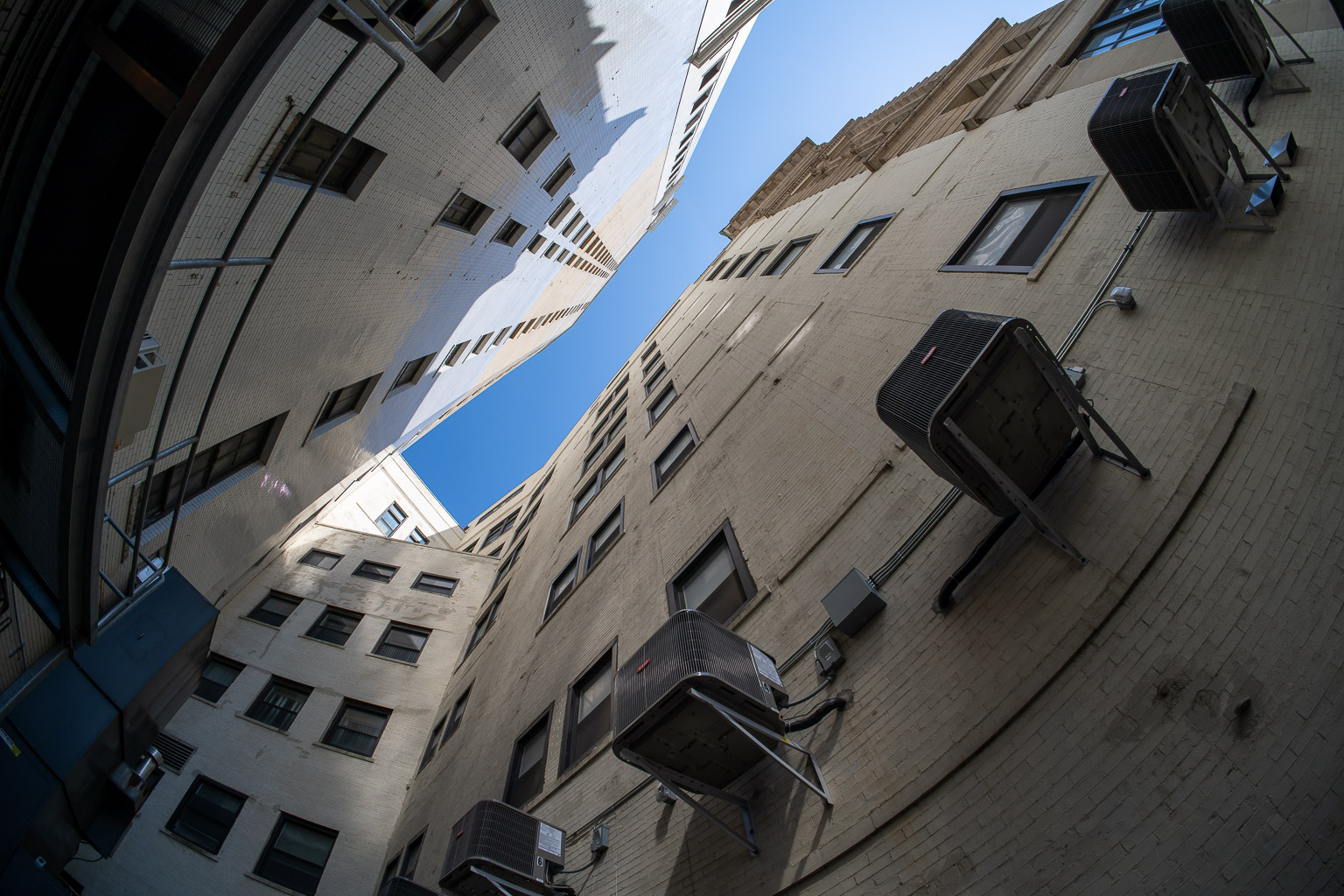
The David Whitney Building is an eighteen-story office building located on Park Avenue between Washington Boulevard and Woodward Avenue. Roughly pentagonal in plan, it conforms to the shape of its site, which is a result of its location at the major radius center of Judge Woodward's 1807 Detroit street plan - Grand Circus Park. Because of this, it has three major elevations, each with an individual entrance. Consequently, the building in its presence radiates from the park, as does the street plan. Its main (north) facade is physically attached to the steel and glass Grand Circus Park People Mover Station platform at mezzanine level. The broad concrete and brick sidewalk in front is obstructed by the large concrete pillars supporting the track. The west and east elevations of the building are at the wide right-of-ways of Washington Boulevard and Woodward Avenue, respectively, paved in the late 1870s in brick. Its southwest end is separated from the Washington Arcade, now the Himelhoch Building, south of it on Washington Boulevard by an alley (3 photos below); the east elevation is adjacent to the Washington Arcade on Woodward Avenue. Way back when I worked for Grand Trunk Western Railroad on Lafayette Blvd at Griswold in 1976-1984, I was sent for an annual physical to a doctor in this building.
The Park (north) facade is five bays wide; the entrance, composed of a revolving door and a single door to its right, is located in the center bay. Two evenly spaced, large bronze framed storefront windows flank each side of the entrance. The side elevations of the building are seven bays wide, their entrances located towards their southern ends.
Fenestration is similar on the three prominent elevations of the David Whitney Building, and is set deeply within the surface of the wall. Floors two through four still contain their original decorative apron panels and window surrounds, although granite strips were added around each of the three-story window bays. Their Chicago-style arrangements - a single opening containing a central window flanked on each side by a narrower window - are divided by pilasters rising up through the parapet. Within each opening, the center fixed pane window unit is framed with a Greek fret pattern on the faces of its surround, dividing it from the outer, double-hung sash, narrower windows. Oramental apron panels divide floors two through four horizontally, the panels framed by a running Greek fret; these panels have a recessed panel surrounded by an egg-and-dart pattern within.
Floors six through fourteen are in their original condition. Each bay is divided in two by a brick pilaster rising up through the parapet, and each half of the divided bay contains one double-hung sash window, beneath which is a recessed brick decorative apron. Originally on the fifteenth floor, separating each pair of windows, was a cartouche. Floors sixteen through eighteen, the upper floors, have been altered to remove any semblance of the original groupings of windows. Instead, narrow pilasters extend from the floors below through the parapet.
Both the interior and exterior of the David Whitney Building were designed to maximize the beneficial effects of natural light. Originally sheathed in light stone, white glazed brick, and white terra cotta, the exterior of the building was a preface to the white enameled brick and glazed terra cotta surfaces reflecting natural light within.
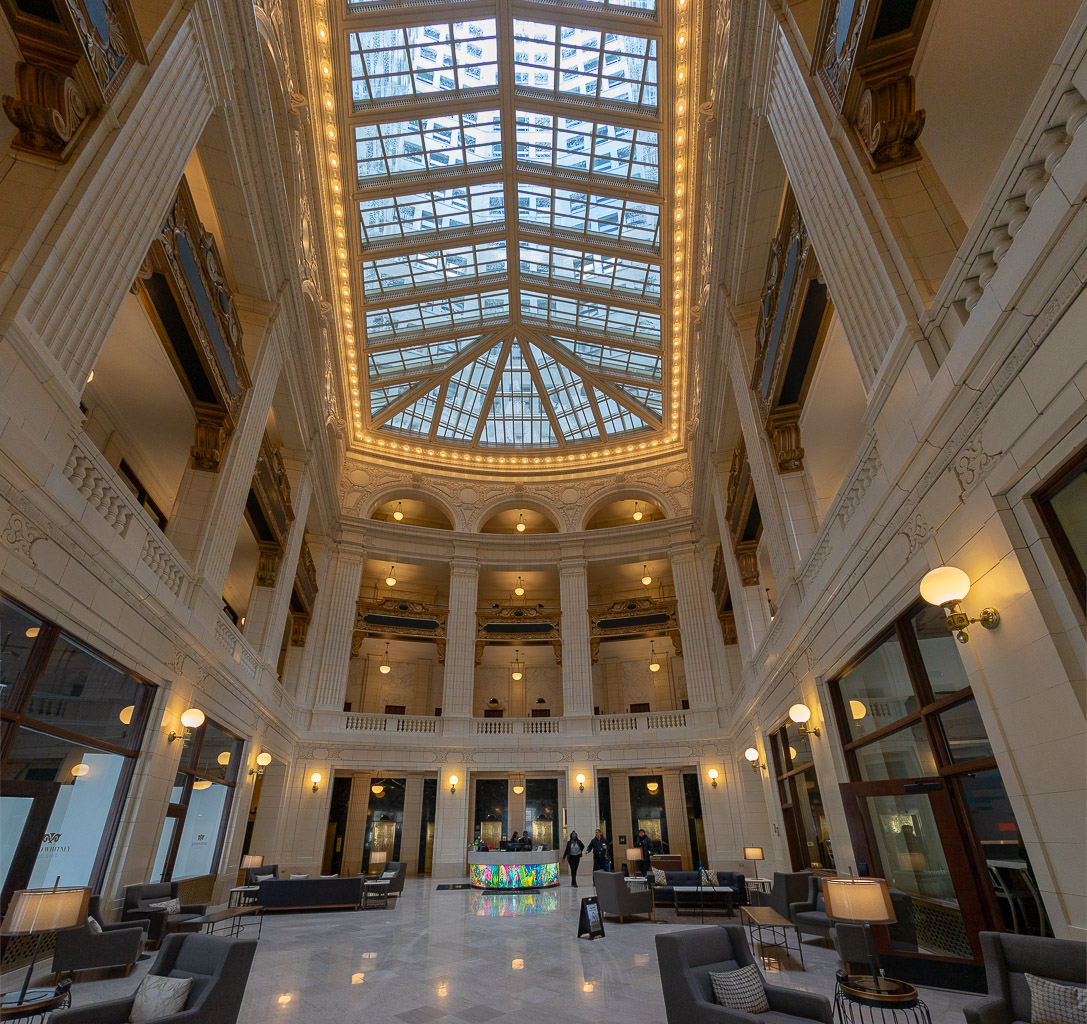
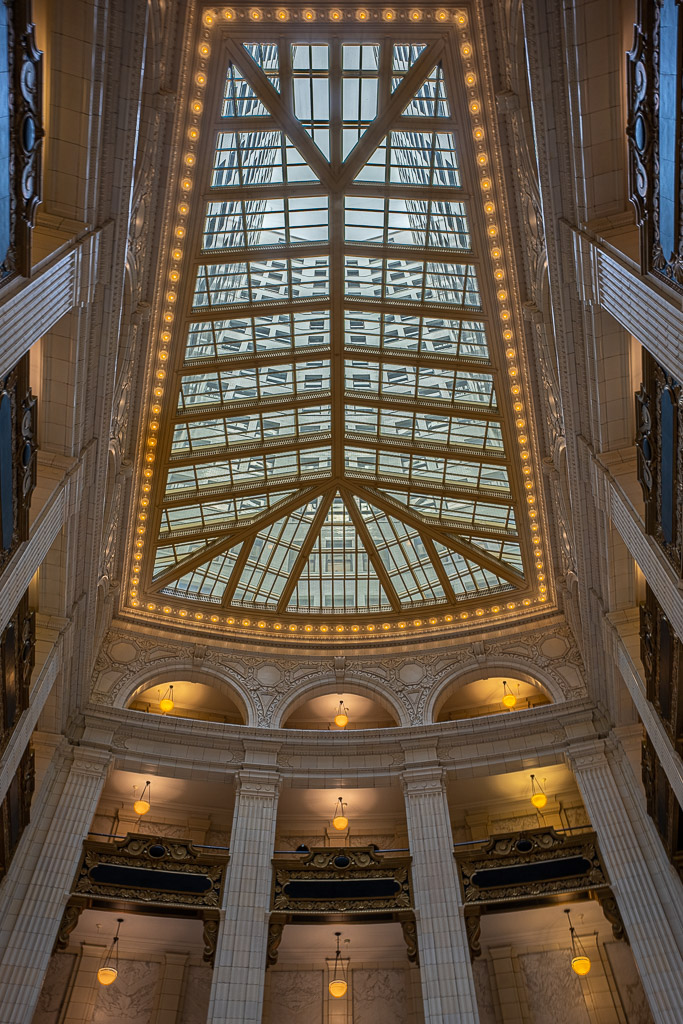
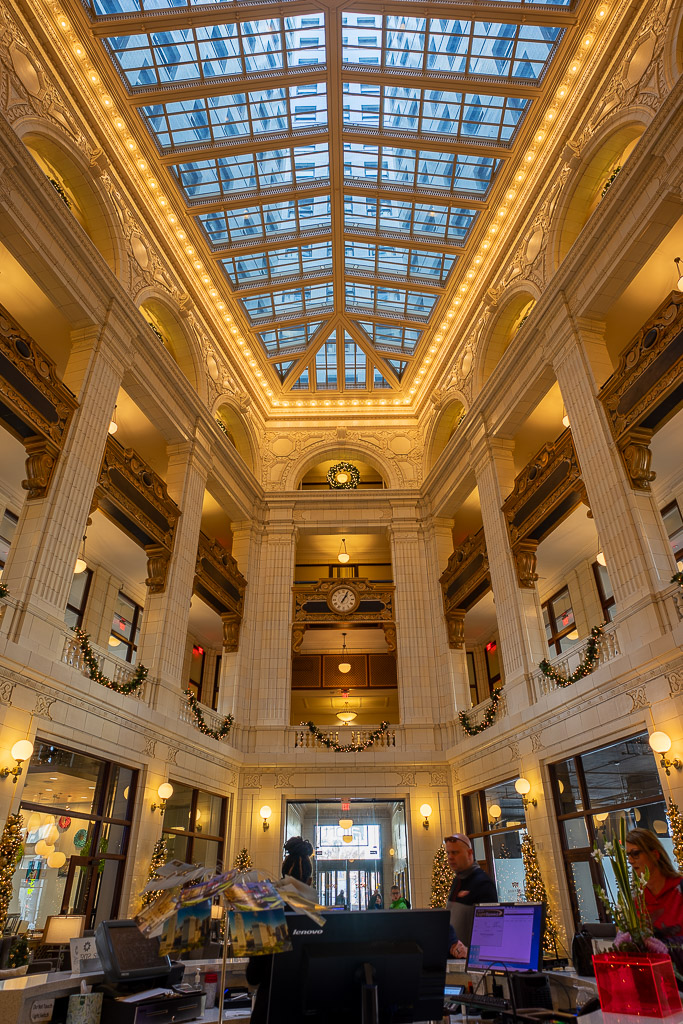
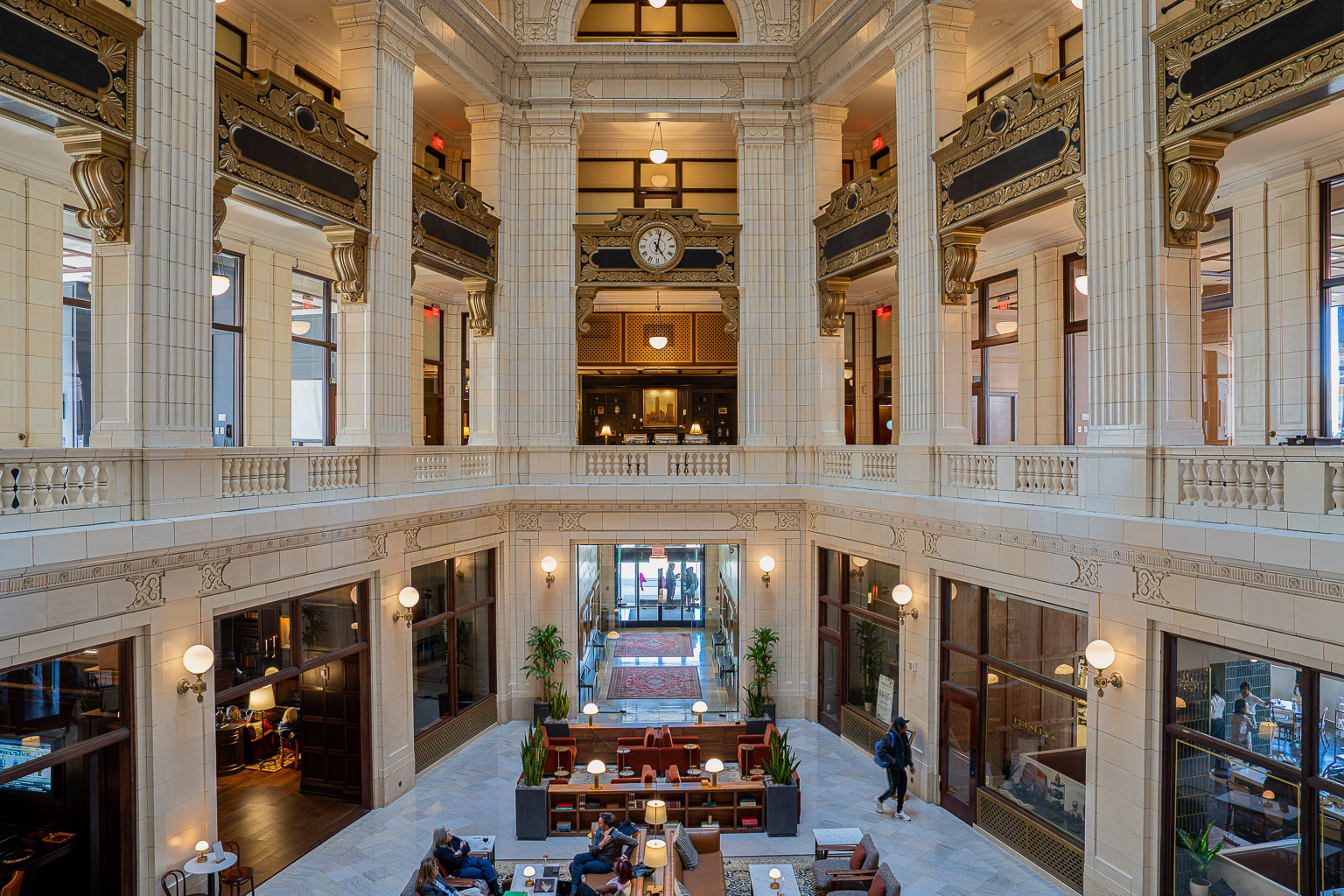
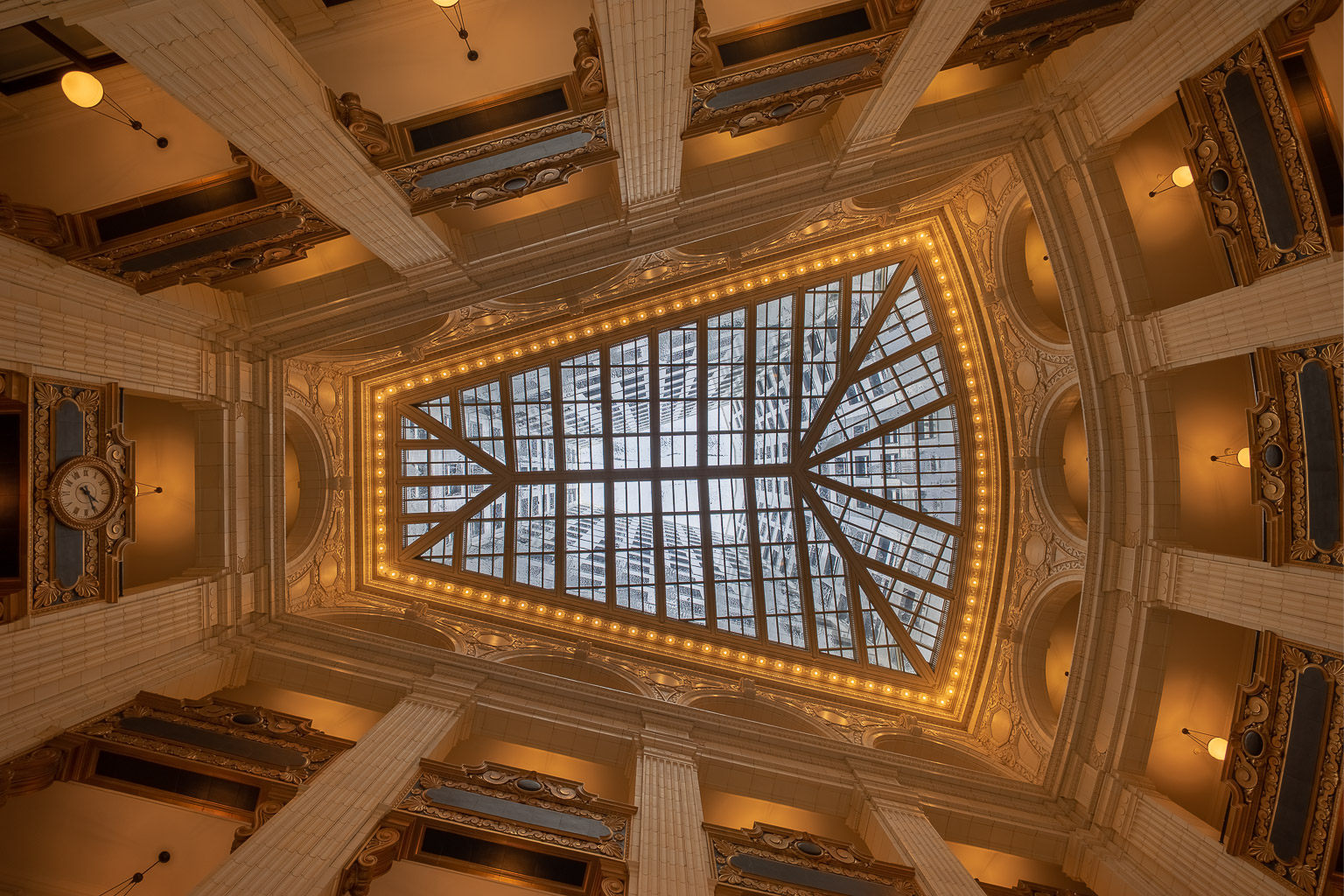
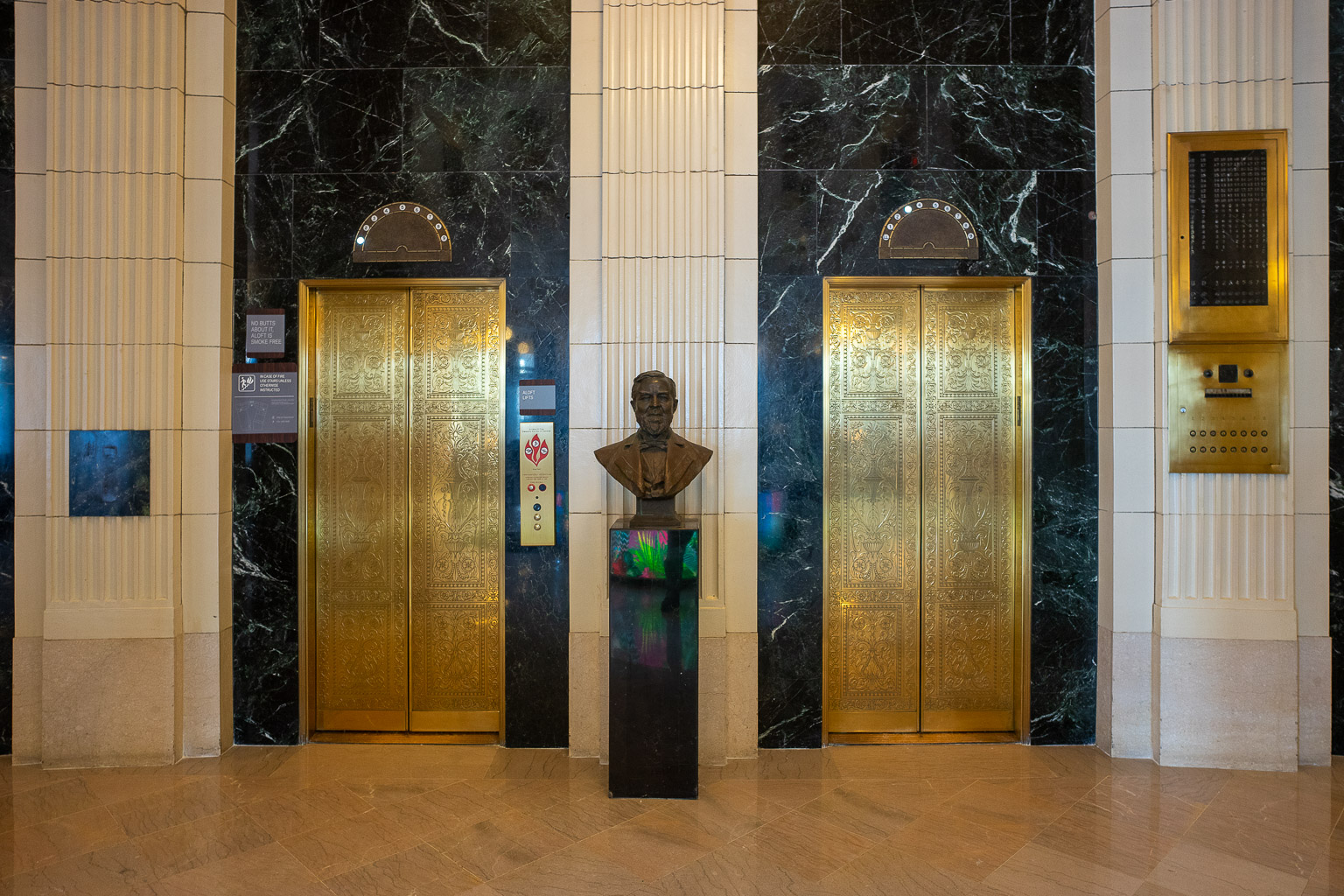
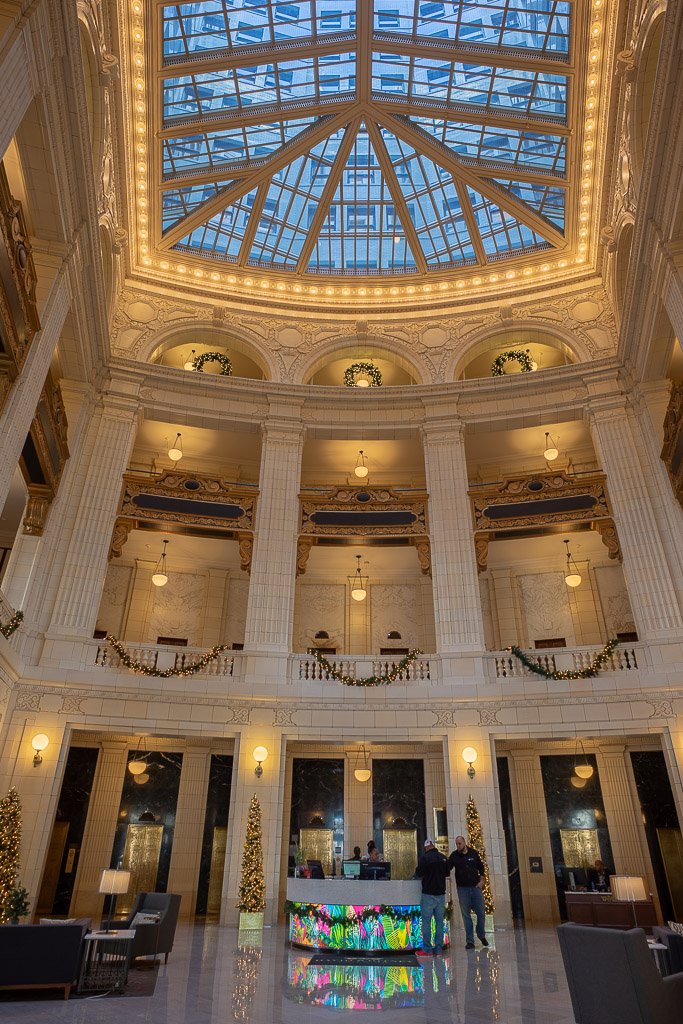
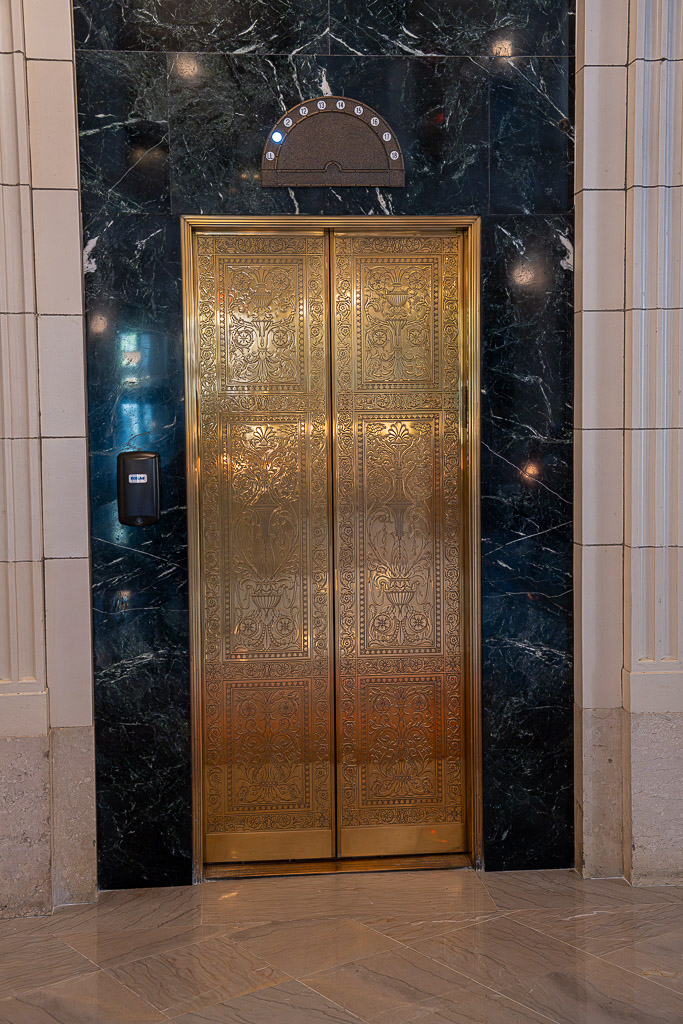
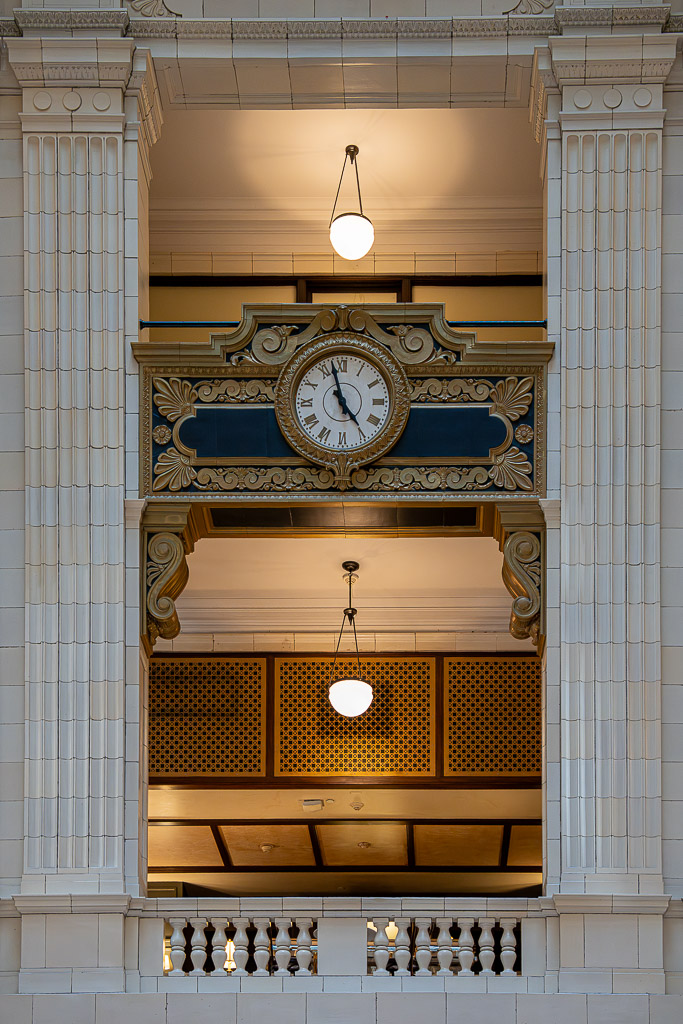
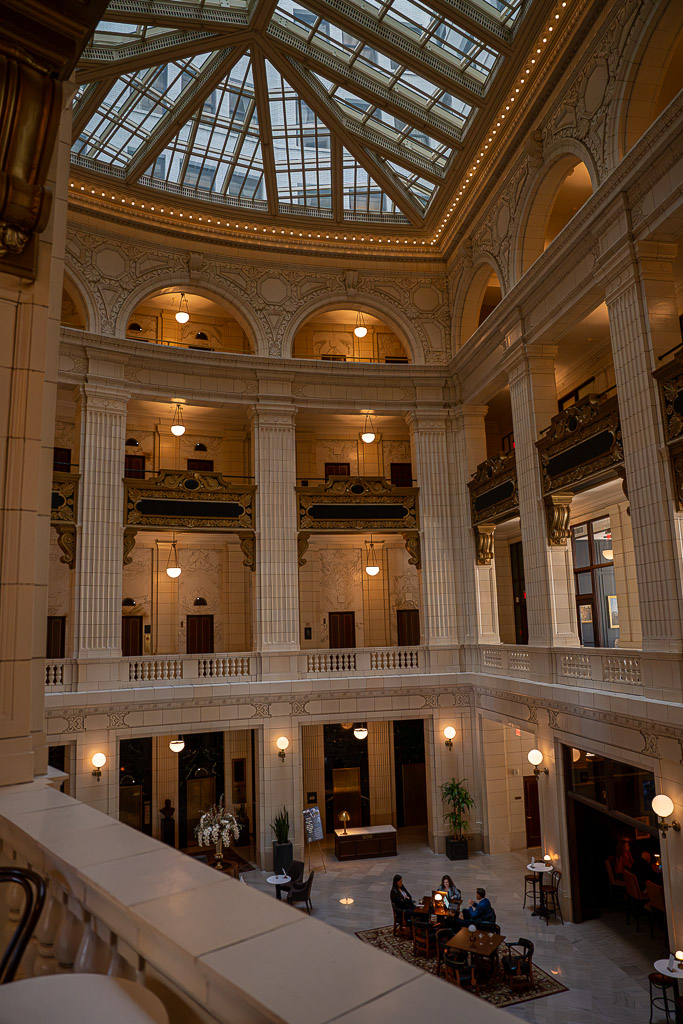
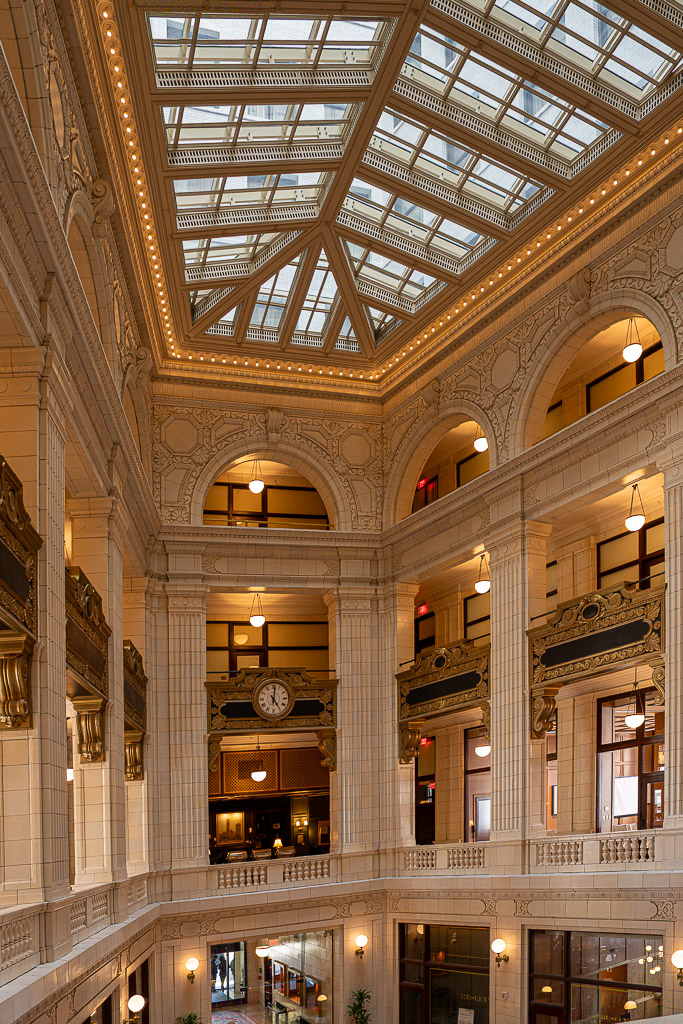
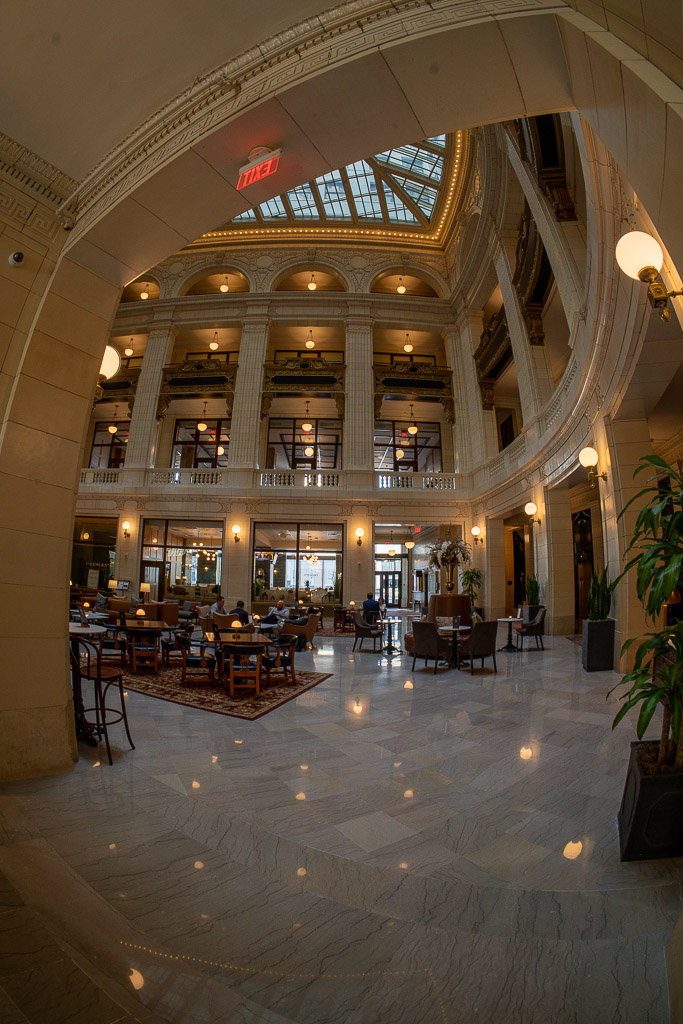
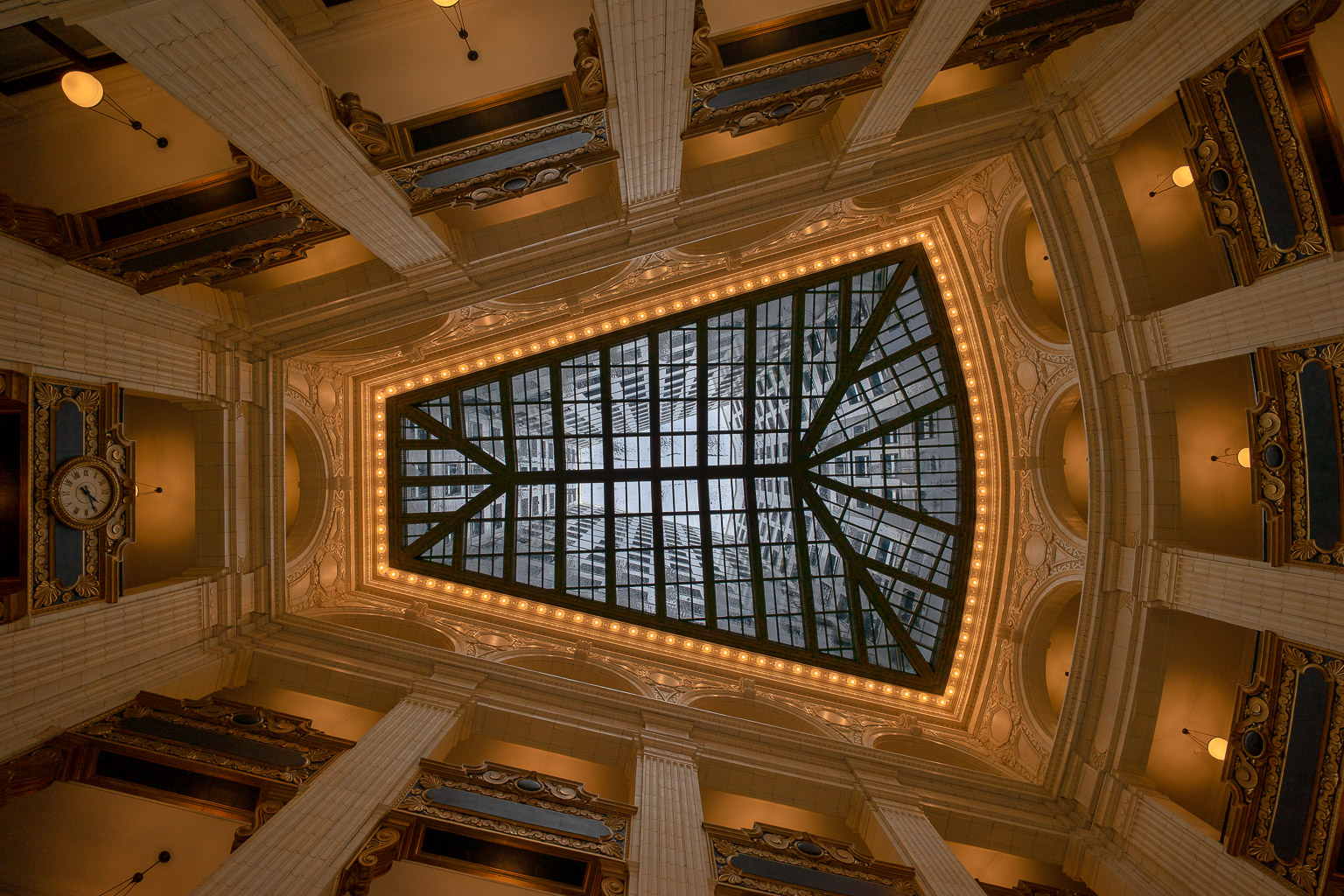
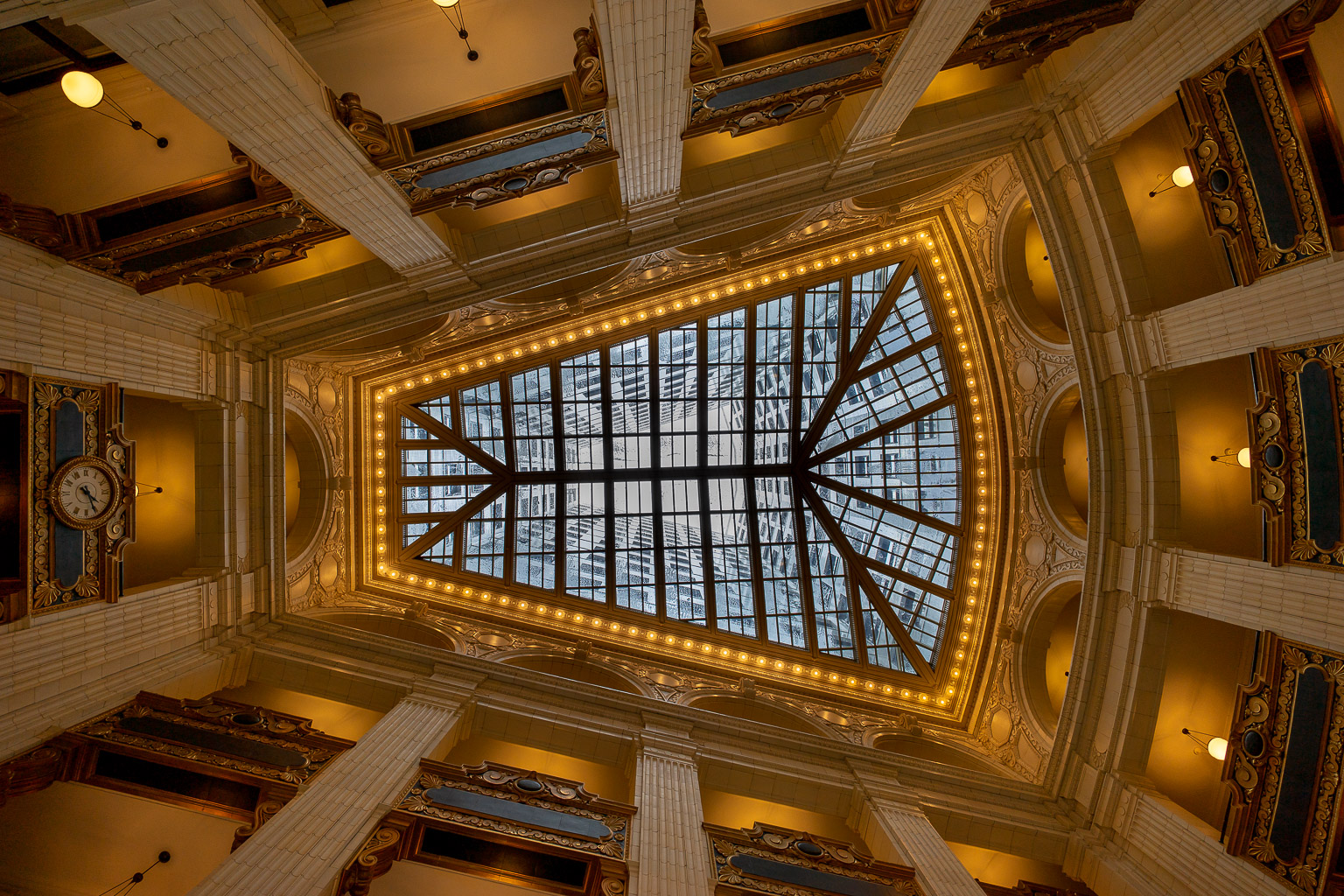
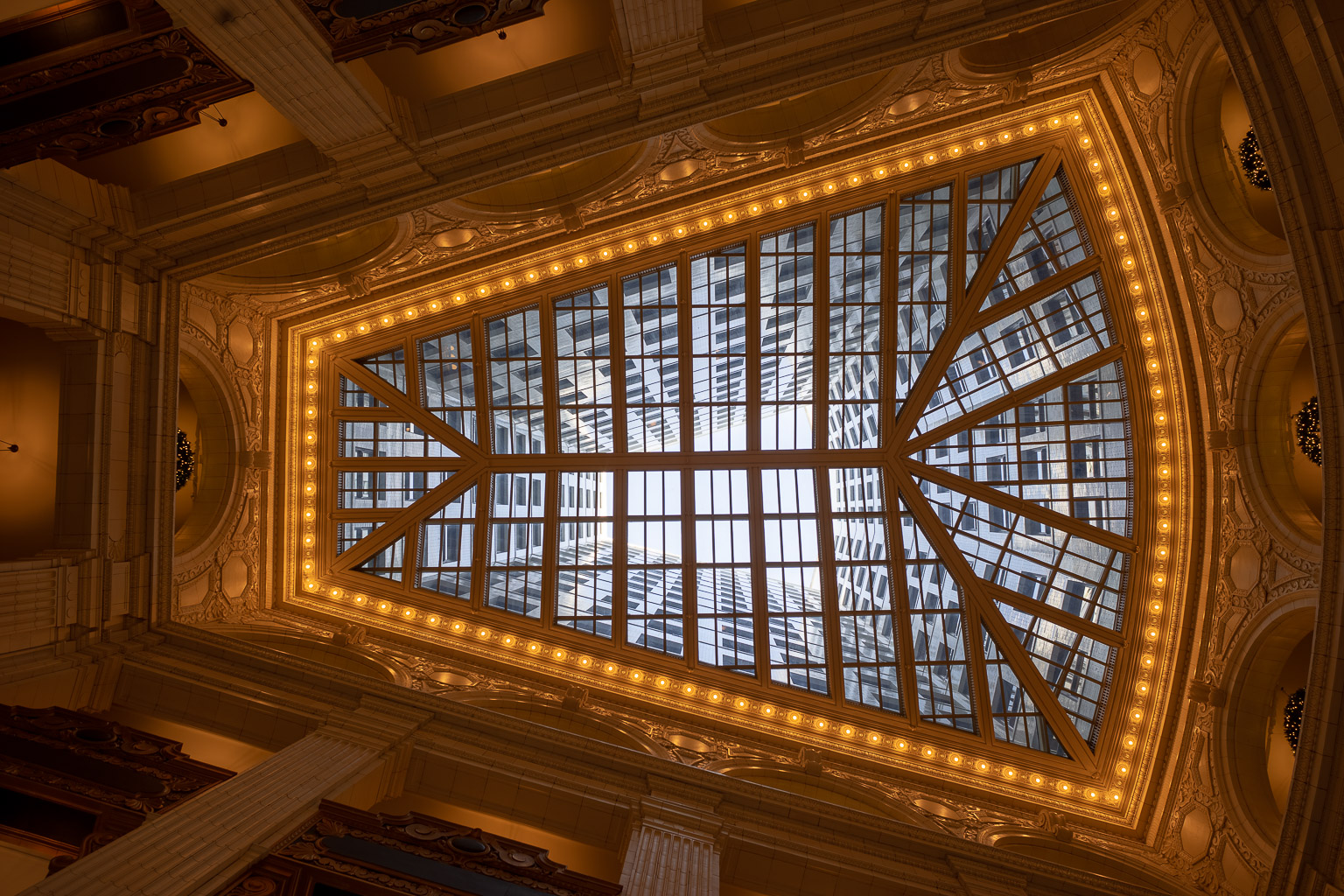
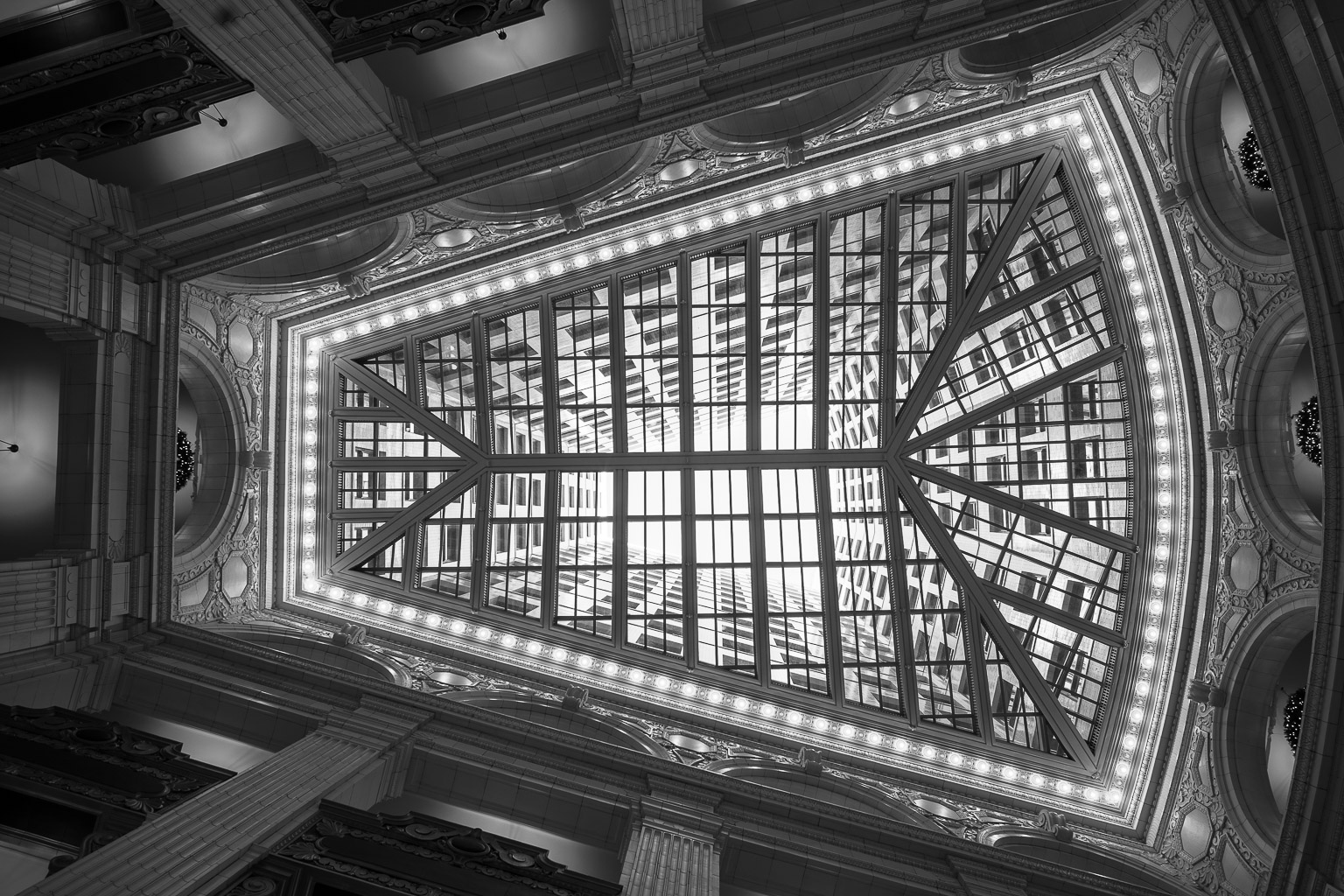
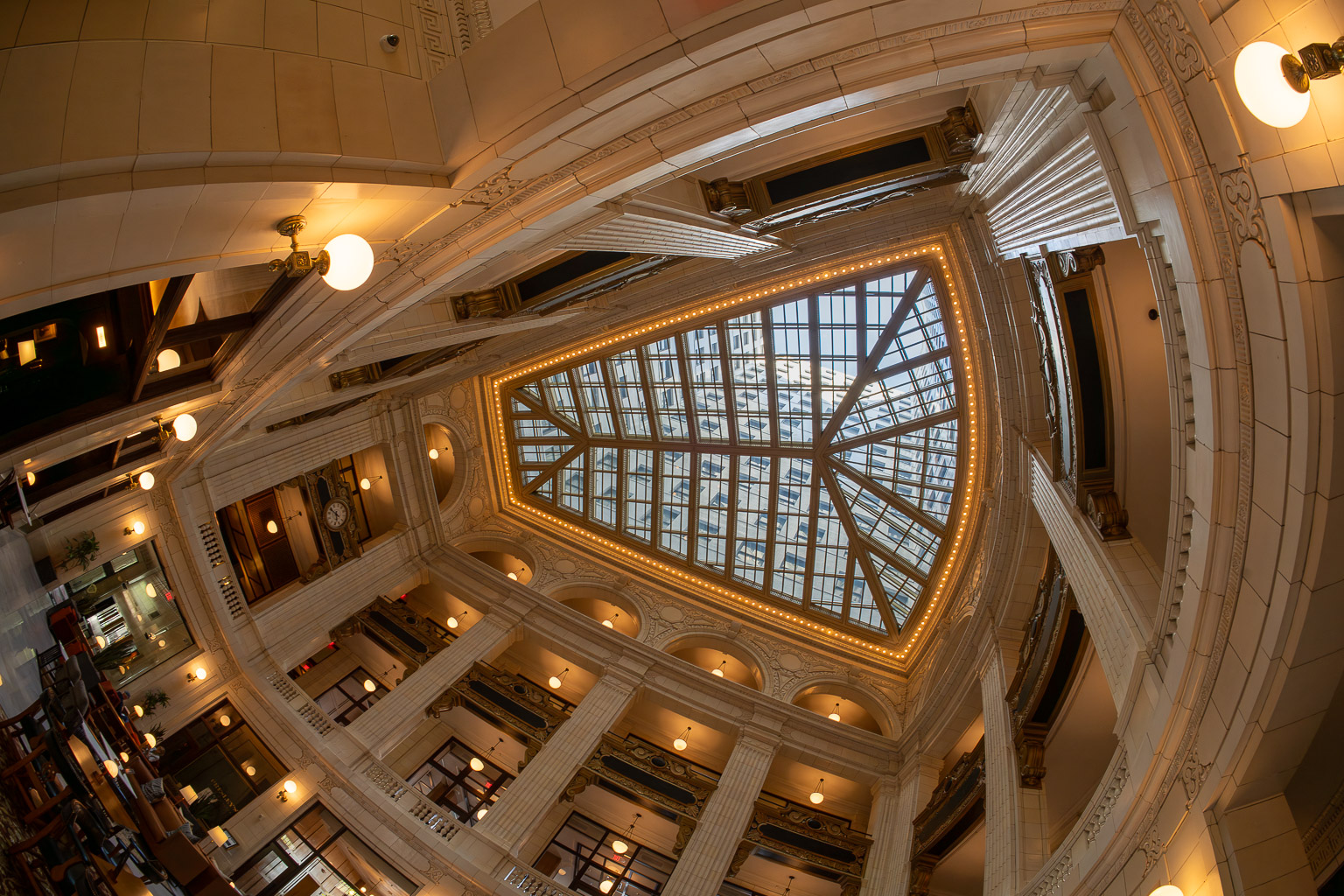
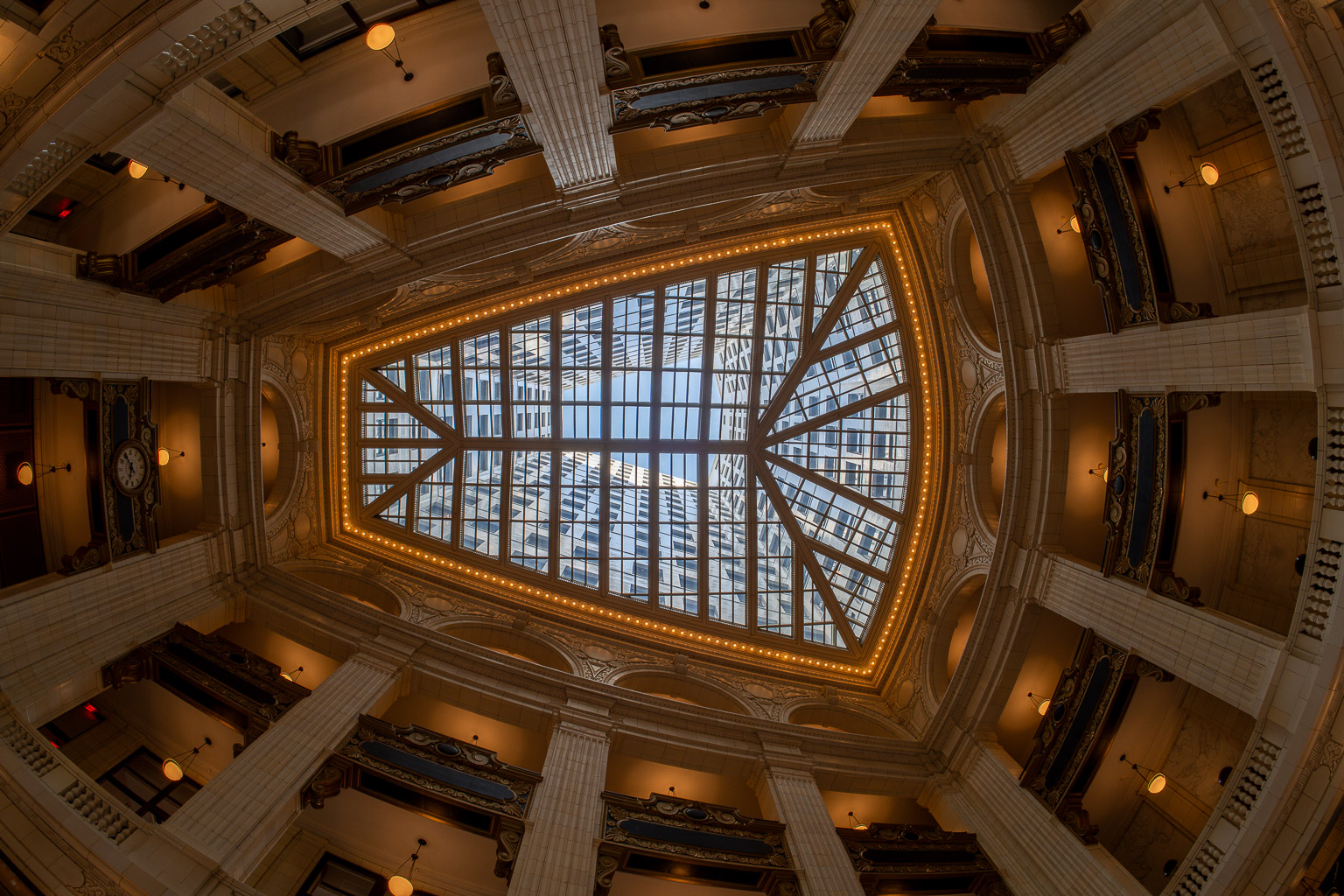
Entrances from Park Avenue, Washington Boulevard and Woodward Avenue lead to a central atrium lobby or rotunda which rises seventy-one feet, or four stories, above the entrance level to a glass skylight. The atrium lobby is surrounded by arcaded corridors leading to shops on the sides and elevators in the rear which line the perimeter of the building. The atrium lobby is faced with white glazed terra cotta. There is a balustrade at the second level of the arcade and pilasters rising from the second level through the third level. The pilasters are capped with an entablature which is surmounted by semi-circular arched openings at the fourth level. Ornate terra cotta medallions decorate the spandrel area; each arch contains a key console. The third level contains dark-colored terra cotta spandrel panels visually supported on decorative consoles. The south wall of the atrium contains the seven elevators, each with ornate brass doors and decorative terra cotta work surrounding the doors at each floor level. The interior of the lobby has not been altered, except for some alterations to individual storefronts.
The upper fourteen stories contain offices surrounding the open light court above the atrium skylight. This center light court of over 3,000 square feet in area is open to the sky at the top, allowing the offices facing the court to be almost as well-lighted and ventilated as those facing the street. Italian marble was used to line the corridor floors and walls throughout; corridor doors and frames were mahogany. Within the individual suites were mahogany or oak woodwork and maple floors. The interior of the office area has not been altered except for changes in the offices themselves.
Below are more exterior photos of the David Whitney Building.
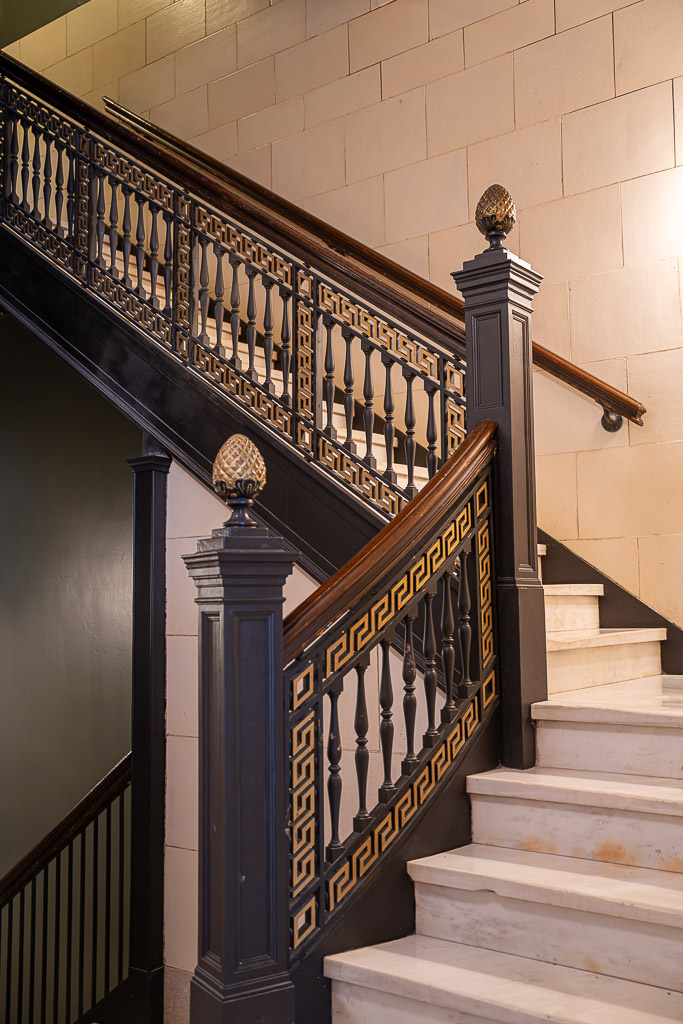
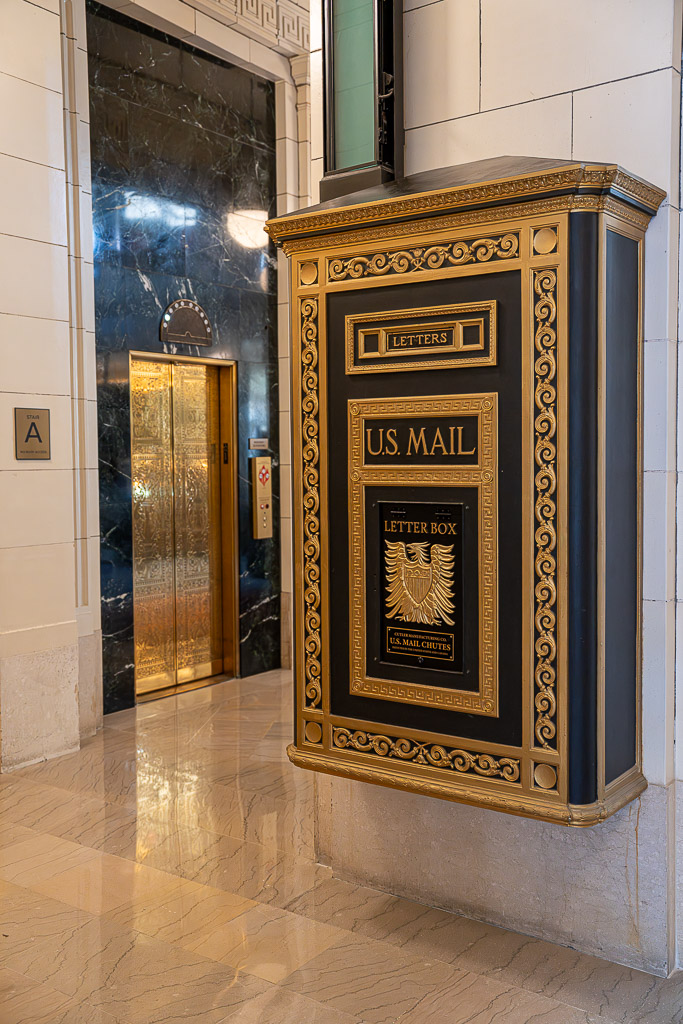
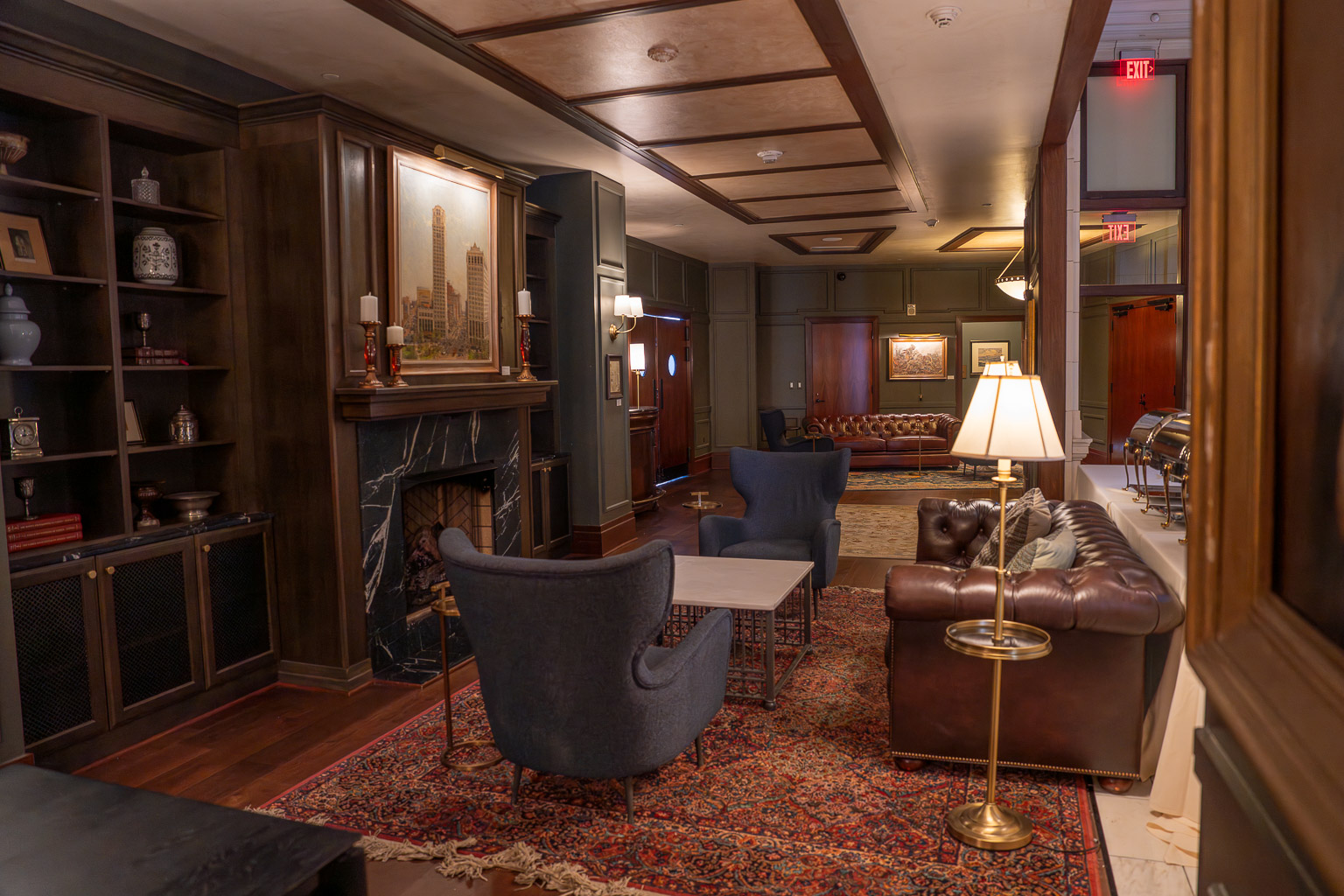
Some details of the beautiful lobby are shown in the photos below.
The glass atrium, showing the 4-sided tower rising up toward the sky, is the real showpiece of this building.
More photos and more description of this building can be found at HistoricDetroit.org.